
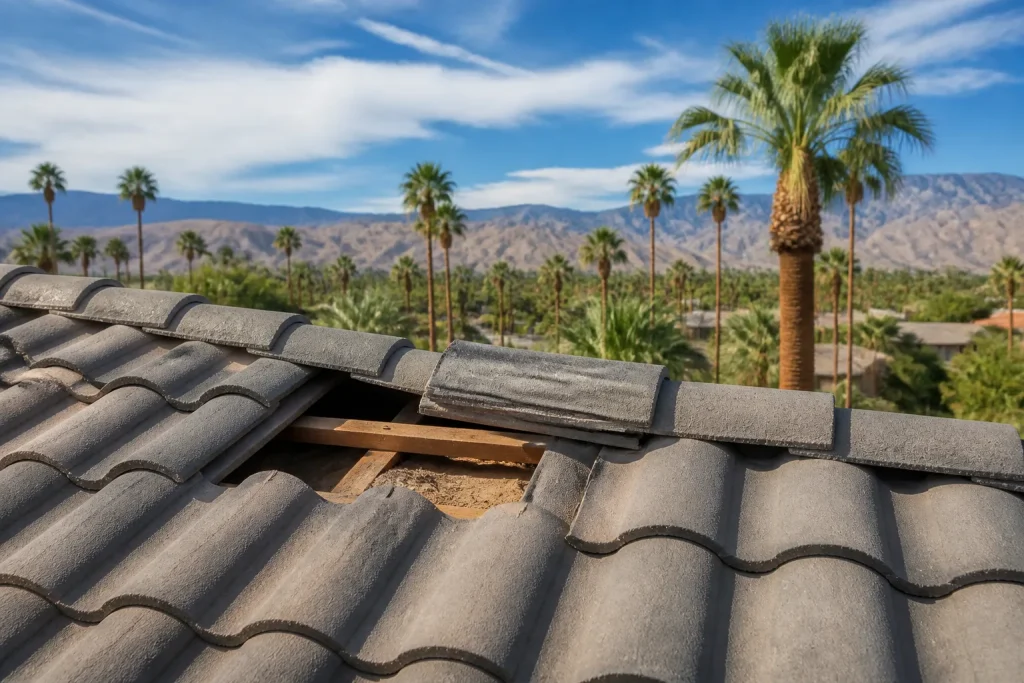
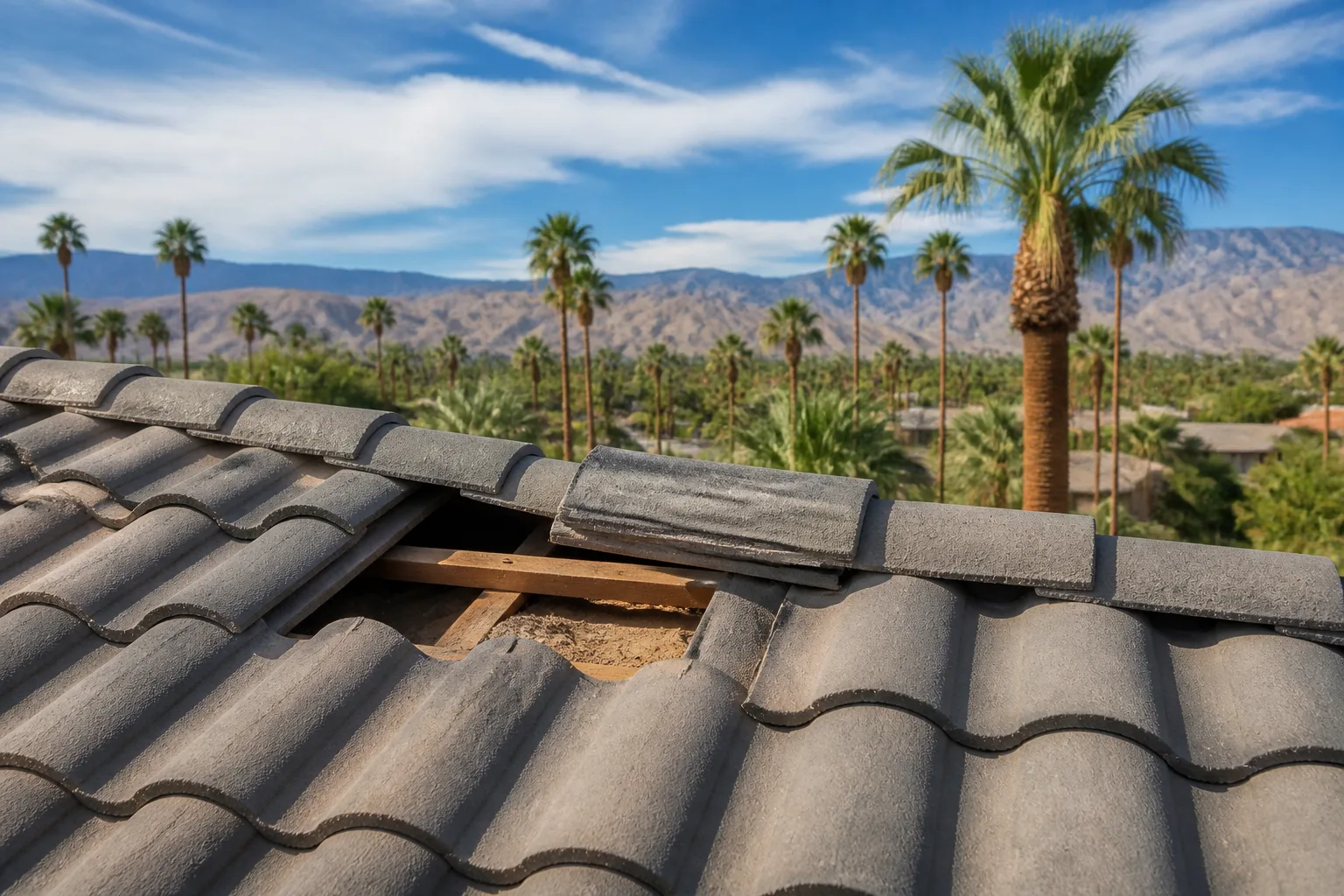
Boral Roof Repair in Paradise: A Homeowner’s Guide
Boral concrete tile is built to hold up for decades in desert heat, yet the most common reason Paradise homeowners end up with a patchwork roof is simple: the repair crew treated it like generic concrete tile. They ignored Boral’s specific color-lock coating, its profile tolerances, and the way its tiles behave under years of thermal cycling. The result looks wrong from the street and can be expensive to undo. This guide is about getting Boral repairs right the first time in Paradise. If you’d rather not sort through it alone, call (833) 936-2087 and we’ll take a look.
Key Takeaways
- Boral tile has its own profiles, coatings, and colorways – a “close enough” tile from another maker rarely matches.
- Matching discontinued Boral products takes legwork in the Las Vegas valley; plan for it before work starts.
- Desert UV and low humidity demand specific mortar and sealant choices, not the generic tub from the hardware store.
- Repair documentation matters if you want to keep Boral warranty coverage intact.
- Ridge caps, field tiles, and hip transitions are where Boral roofs in Paradise tend to fail first.
What Makes Boral Concrete Tile Different From Other Brands?
Boral’s concrete tile lines are engineered for long service life in hot, dry climates, and that engineering shows up in details a generic repair misses. The two that trip people up most are the surface coating and the profile geometry. Boral’s color-lock coating is part of how the tile holds its color through relentless desert sun. Substitute a tile from another manufacturer and you get a patch that reads slightly different in tone, sheen, or texture – the kind of mismatch that’s obvious on a clear Paradise afternoon and impossible to hide.
Profile matters just as much. Concrete tile comes in a range of shapes and interlocks, and each one is designed to shed water a particular way. A tile that’s “close enough” in profile may not seat correctly against its neighbors, which leaves gaps where wind-driven rain can get in. It may also sit at a slightly different height, which throws off the visual rhythm of the roof.
In our experience, the homeowners who end up unhappy are almost always the ones who let a contractor talk them into a mixed-brand patch to save a little on materials. The savings rarely hold up against the cosmetic cost.
- Coating: Boral’s color-lock finish is product-specific; mismatched tiles age differently.
- Profile: Interlocks and heights vary by line, so a substitute may not seat or drain correctly.
- Colorway: Even same-family colors shift between production runs, so lot matching matters.
How Do You Source Matching Boral Tile in the Las Vegas Valley?
Sourcing matching Boral tile around Paradise comes down to knowing your exact product before you start calling around. The first step is identifying the profile and colorway on your roof – the label on the original packaging is ideal if you have it, but most homeowners don’t. From there, the search moves to local suppliers who carry Boral, and to the manufacturer’s own product records. It’s worth asking for a color and profile match, not just a “Boral tile.”
The harder scenario is a discontinued profile or colorway. It happens, and when it does, you have a few realistic options:
- Pull from existing stock. Sometimes a local supplier still has leftover inventory of a discontinued line. It’s worth the calls.
- Harvest from the roof itself. Tiles from an inconspicuous area – a back slope, a section under a valley – can sometimes be moved to the visible repair zone, with the harvest area refilled using a less-visible matching tile.
- Consider a wider scope. If the repair area is large and no match exists, a partial re-roof of a single slope with a current Boral line can look more intentional than a permanent patch.
We work with Boral as one of the seven material brands we install, and that lets us have a real conversation with you about matching rather than just pushing whichever tile is on hand.
What Mortar and Sealant Specs Does Boral Tile Need in the Desert?
Boral tile repair in a high-UV, low-humidity environment like Paradise asks for two things generic repair advice glosses over: mortar that survives thermal cycling without cracking, and sealants rated for sustained sun exposure. Standard mortar mixes can dry too fast in desert heat, and ordinary sealants break down under UV faster than you’d like. The fix is to use products specified for the application and to follow the manufacturer’s mixing and cure guidance rather than improvising.
Thermal cycling is the real driver here. A Paradise roof heats up through the day and cools sharply at night, and that expansion and contraction works on every mortar joint and seal. Cold joints, over-thinned mortar, and sealants applied outside their rated temperature window are all common causes of repairs that fail within a season or two.
- Mortar: use a mix suited to concrete tile bedding and follow Boral’s guidance for the specific repair.
- Sealant: choose a UV-rated product, applied within its temperature window and allowed to cure properly.
- Timing: hot afternoons aren’t the moment for a mortar repair; cooler parts of the day give a better cure.
None of this is exotic. It’s just the difference between a repair that lasts and one that comes back. If you’re not confident about the specs, calling a specialist is cheaper than a redo.
How Does Boral Warranty Coverage Interact With Repair Work?
Boral’s warranty terms are specific about what’s covered and what isn’t, and repairs done with non-Boral materials or by methods the manufacturer doesn’t recognize can compromise coverage. The most important thing you can do as a homeowner is document everything: the original product information, the repair date, the materials used, and the method. A written record is what protects you if a warranty question ever comes up.
Practical steps to preserve coverage:
- Keep your product paperwork. Original installation records and any Boral documentation are worth filing away.
- Get a written repair scope. Ask for the materials, quantities, and methods in writing before work starts.
- Insist on matching products. Where a Boral tile is available, using it keeps the repair inside the manufacturer’s ecosystem.
- Photograph before and after. A simple photo record is surprisingly useful if a claim question ever arises.
Warranty rules shift by product and by the specific terms in the original documentation, so always read yours. A specialist who works with Boral regularly will know what documentation a repair should generate. Our technicians have up to 12 years of experience, and we’ve seen how much a clean paper trail matters when a homeowner needs to lean on coverage.
Where Do Boral Roofs in Paradise Fail First?
Three failure points come up again and again on Boral roofs in Paradise. Understanding them helps you spot a problem early and get it repaired before it spreads.
1. Ridge Cap Mortar Cracking
Ridge caps sit along the peak of the roof, bedded in mortar. Under desert thermal cycling, that mortar is the first thing to crack. Small cracks seem harmless until wind-driven rain finds them, then you’re looking at water tracking under the caps and into the structure.
2. Field Tile Hairline Fractures From Thermal Cycling
The broad field of tile experiences the most sun exposure and the sharpest temperature swings. Over time, hairline fractures develop, usually starting small. They’re easy to miss from the ground but they open a path for moisture.
3. Underlayment Exposure at Hip Transitions
Where roof planes meet at a hip, the tile layout gets complicated. If a transition isn’t detailed correctly, the underlayment can be left exposed to UV, which shortens its life and sets up a leak. This one is subtle, and it’s a frequent reason we recommend a proper inspection rather than a quick look.
Spotting these early is the whole game. A standalone roof inspection gives you a clear picture of what’s actually going on before any repair work begins. If you’re seeing signs of any of the above on a Boral roof in Paradise, it’s worth getting eyes on it. Related services in Paradise: roof repair and roof replacement.
When to Call a Pro
Some roof issues are genuinely DIY-friendly; Boral tile repair usually isn’t one of them. If you’re dealing with cracked ridge mortar, fractures across a field of tile, or a transition that looks suspect, the risk of making the problem worse – and creating a cosmetic mismatch you can’t undo – is real. The right call is to have a specialist look at it. We do one thing: roofs. Repair, replacement, and inspection, start to finish. That focus is why we know Boral’s quirks and why we can talk you through the options honestly. And if you’re comparing material choices for a broader repair, we also work with brands like Owens Corning, Atlas, and Tamko.
The Bottom Line
Boral concrete tile is well-suited to Paradise’s climate, but only when repairs respect what makes it different: its coatings, profiles, and colorways. Matching tile, using the right mortar and sealants, and keeping good records are what separate a repair that lasts from one that doesn’t. If you need Wexford Roof Repair to take a look, we offer free estimates. Call (833) 936-2087. We answer 24/7. Fast dispatch from 7am to 7pm, Sunday through Friday. Closed Saturday.
Frequently Asked Questions
It’s possible but rarely a good idea. A different manufacturer’s tile usually won’t match Boral’s profile, height, or color-lock coating, and the mismatch becomes obvious over time. Always ask for a Boral match first. Call (833) 936-2087 for a free estimate.
Cost depends on the repair scope, the materials needed, and whether matching Boral tile is available. We set pricing per job with a written estimate, and estimates are free. Call (833) 936-2087 to get an exact quote.
Not automatically, but using non-Boral materials or unapproved methods can complicate coverage. Keep your product documentation and ask for a written repair scope that lists materials and methods. A specialist can help you preserve coverage. Call (833) 936-2087.
You have options: sourcing leftover stock, harvesting tiles from a less-visible area of your own roof, or – if the repair is large – considering a partial re-roof with a current Boral line. A specialist can walk you through which fits your roof. Call (833) 936-2087.
Written by the team at Wexford Roof Repair.
Need Roofing Help?
Call Wexford Roof Repair - licensed & insured, with free written estimates in Paradise.
(833) 936-2087