
Last updated November 15, 2026
 Architectural shingles
 Metal roofing
 Tile roofing
 GAF
 Owens Corning
 Flat & low-slope
Free roof inspection with deck photos before we talk money - GAF and Owens Corning certified installation
Roof Repair Troubleshooting in Paradise: Common Problems and How to Fix Them
A ceiling stain in a Paradise home during monsoon season is more likely to trace back to a failed pipe boot or an HVAC curb flashing than to a shingle. Most homeowners, and plenty of generalist contractors, go straight to the shingles and miss the actual source. That misstep is what turns a simple repair into a much bigger bill. This guide works forward from the specific failure causes we see in Paradise, walks you through tracing an interior stain to its real entry point, and shows you which problems get misdiagnosed most often in this climate.
Quick Answer
Roof repair troubleshooting in Paradise starts with cause, not symptom. The common failure points here are heat-damaged sealant around penetrations, failed pipe boots, cracked HVAC curb flashing, wind-lifted shingle edges, and installation defects that show up after a few monsoon cycles. Trace the water back to where it actually enters the roof deck before anyone touches a shingle, because the visible stain and the real leak are almost never in the same spot.
Styles & brands we work with
- Architectural shingles
- Metal roofing
- Tile roofing
- GAF
- Owens Corning
- Flat & low-slope
Table of Contents
- Why Cause-First Diagnosis Matters in Paradise
- The Four Root Causes Behind Almost Every Roof Leak
- How to Trace an Interior Water Stain to Its Entry Point
- The Five Most Misdiagnosed Roof Problems in Paradise
- What You Can Safely Check Yourself vs. What Needs a Pro
- Red Flags That a Previous Repair Was Misdiagnosed
- Repair or Replace? How to Read the Signs
- Getting a Second Opinion the Right Way
Why Cause-First Diagnosis Matters in Paradise
Roof troubleshooting guides usually start with what you can see: a stain, a missing shingle, a drip. That works in places where the causes are limited. In Paradise, the causes are specific to a hot, dry climate broken up by intense monsoon rain, and that combination produces a failure pattern you won’t find on a page written for Seattle or Miami. Dry heat bakes sealant until it cracks. Then the first hard rain of the season finds every crack at once.
That’s why we start with cause. When a homeowner calls about water coming in, the first question isn’t “which shingle is missing?” It’s “where does water enter a roof in this climate, and which of those points fit what you’re seeing?” The answer almost always lands in one of four places: a penetration (pipe boot, vent, HVAC curb), a flashing detail, a fastener, or a shingle defect. Getting that diagnosis right the first time is what separates a modest repair from a much larger one, because a misdiagnosed leak gets chased for months while the real entry point keeps letting water in.
We do one thing: roofs. Repair, replacement, and inspection, start to finish. That focus is why cause-first diagnosis is how we work on every roof repair job in Paradise, not just the tricky ones. The pattern shows up too often to ignore: the shingle is a bystander, and the pipe boot above it is the culprit.
The Four Root Causes Behind Almost Every Roof Leak
Nearly every leak we troubleshoot in Paradise traces to one of four causes. Each looks similar from inside the house. Each demands a completely different fix. Here’s how to tell them apart.
1. Heat Blistering
Prolonged sun exposure on a roof deck heats asphalt shingles far past the air temperature. Over time, trapped moisture inside the shingle can blister the surface, and those blisters crack. When the monsoon rain arrives, water pushes through the cracked blisters. Heat blistering usually shows up on south- and west-facing slopes first, because those take the most direct sun. The tell is a pattern of small, raised, broken bubbles rather than a clean tear.
2. Impact and Storm Damage
Hail is uncommon in Paradise, so don’t assume a damaged shingle came from hail. Wind-lifted and wind-torn shingles are far more common, especially along ridge lines and roof edges where uplift pressure is highest. Impact damage from falling debris or a dropped tool also happens. The tell here is a localized area of damage with a clear break or crease, not a field-wide pattern.
3. Flashing Failure
Flashing is the metal or membrane that seals every joint, wall intersection, valley, and penetration. Flashing sealants dry out and crack faster in Paradise’s dry heat than in wetter climates. The tell is water appearing near a wall, chimney, valley, or roof-to-wall transition. Flashing failures are the most misdiagnosed leaks we see, because the shingles around the flashing often look fine while the sealant underneath has been gone for a season.
4. Installation Defects
Some leaks were built in from day one. Nail placement too high or too low on the shingle, insufficient headlap, missing underlayment at a valley, or a penetration sealed with the wrong material all create a slow leak that only shows up after a few rain cycles. The tell is a leak that appears in a straight line or a repeated pattern and doesn’t match any visible surface damage. If a roof leaks in the same spot season after season, suspect installation before you suspect the shingles.
How to Trace an Interior Water Stain to Its Entry Point
In Nevada’s dry heat, water often travels a surprising distance along the roof deck, underlayment, or framing before it shows up on your ceiling. That’s why a ceiling stain is a starting clue, not an answer. The entry point can be several feet uphill and off to one side of where the stain appears. Tracing it correctly is the whole exercise.
- Mark the stain on the ceiling with a pencil. Note its exact edge and take a photo. This gives you a baseline to compare against after the next rain.
- Go into the attic and look uphill. Water follows the path of least resistance along framing and decking. Shine a light on the framing members above and uphill of the stain and look for water staining, dark streaks, or white mineral deposits.
- Check the attic side of every penetration above that area. Pipe boots, vent stacks, and HVAC curbs are the most common entry points in Paradise. Look for daylight, dark water tracks, or a rusted nail.
- Match the attic track to the roof surface. Once you’ve found the water track in the attic, follow it uphill to the point where it starts. That starting point is your candidate entry location on the roof surface.
- Confirm before repairing. Have someone run a hose at the candidate entry point (low pressure, from below) while a second person watches in the attic. If water shows up inside, you’ve found the entry. If not, keep working uphill.
This is the process a professional inspector runs systematically. It’s also why a standalone inspection matters: you get an honest look at what’s actually wrong before you commit to any work. If the tracing points to a failing roof section rather than a single entry point, then it’s time to talk about roof replacement rather than another repair.
The Five Most Misdiagnosed Roof Problems in Paradise
We’ve been called out to enough roofs in Paradise to know which problems get labeled wrong. These five are the repeat offenders.
- Granule loss on new shingles that isn’t a defect. New asphalt shingles shed loose granules for the first several rain cycles. That’s a manufacturing release agent working its way off the shingle, not a sign of failure. Homeowners often panic over “premature granule loss” on a brand-new roof. The test is simple: if the granules are collecting in gutters in the first year and the shingles otherwise look intact, it’s normal. If granules are shedding off an older roof in patches, that’s real wear and worth checking.
- A pipe boot leak blamed on a shingle. This is the classic Paradise misdiagnosis. Water staining near a stack is traced to the nearest shingle, which looks worn, gets replaced, and the leak continues. The real culprit is the rubber boot around the pipe, which cracks in the dry heat. Replace the boot, not the shingles.
- HVAC curb flashing misread as a roof-to-wall leak. The metal curb around an HVAC unit sits on the roof and is sealed at its base. When that sealant fails, water enters at the curb and shows up inside near a wall. A contractor sees the wall stain, assumes the wall flashing, and misses the curb entirely.
- Condensation mistaken for a roof leak. In a hot, dry climate, condensation on a cold attic surface or an HVAC line can look exactly like a leak. The tell is that it appears on cool mornings or when the system runs hard, not during rain. A moisture meter and a careful look at the attic, not the roof, confirms it.
- A wind-lifted shingle treated as a worn roof. One lifted edge along a ridge looks like a worn roof and triggers a replacement pitch. In reality, a single lifted tab is a targeted repair. The rest of the roof may have years left.
What You Can Safely Check Yourself vs. What Needs a Pro
Some roof troubleshooting is safe and useful from the ground or the attic. Some isn’t safe at all, and a homeowner who tries it risks serious injury. A real roofer will always tell you which is which. Here’s the split.
Safe from the ground
- Look up with binoculars or a phone camera for lifted shingles, missing pieces, or visible flashing gaps.
- Check gutters and downspouts for granules, shingle pieces, or debris.
- Look for dark streaks or staining on the underside of eaves from the ground.
- Note where water stains appear on interior ceilings and photograph them.
Safe in the attic (carefully)
- Trace water stains and marks on the framing and decking.
- Check for daylight or rust around penetrations from below.
- Look for frost, condensation, or damp insulation that may point to condensation rather than a leak.
Needs a professional
- Walking the roof surface, especially any steep pitch or during or after rain.
- Removing shingles, flashing, or underlayment to inspect what’s underneath.
- Testing entry points with water and confirming the result in the attic.
- Any work near a penetration or skylight where a fall is possible.
Roofs are dangerous. A steep pitch, wet shingles, and height are a bad combination even for a careful homeowner. The right move is to get a professional on the roof while you do the safe interior checks. If you want an honest assessment without committing to work, our standalone inspection service tells you what’s actually wrong, not just what costs the most to fix.
Red Flags That a Previous Repair Was Misdiagnosed
You had a repair done. The leak came back. That’s the most common reason homeowners call us for a second look in Paradise. Here are the signs that the original diagnosis missed the real cause.
Signs to look for
- The repair didn’t match the symptom. If the ceiling stain was near a stack and the contractor replaced shingles, ask why. It’s often the wrong repair.
- New sealant over old sealant. Flashing and pipe boots sealed with a glob of caulk rather than replaced are a temporary patch, not a fix. It fails in the dry heat.
- Shingle replacement in the field with no flashing or boot work. If the entry point was a penetration, replacing the shingles around it doesn’t stop the leak.
- Water still running a hose test. A proper repair passes a low-pressure water test at the entry point. If it doesn’t, the diagnosis was wrong.
- The same leak returns season after season. A repeated leak in the same location is the clearest sign of a missed root cause, not bad luck.
When you call in a second opinion, tell us what was done, where, and when. The repair history tells us what the previous diagnosis assumed, and that’s usually enough to focus the inspection. Wexford Roof Repair offers free estimates in Paradise, and we’ll tell you straight if the work that was done should have fixed it.
Repair or Replace? How to Read the Signs
Once you know the cause, the next question is whether to repair or replace. In Paradise, that decision usually comes down to how much of the roof has failed, not how old it is. Here’s how we frame it.
- One isolated entry point and surrounding shingles in good shape: repair. A pipe boot, a single section of flashing, or a wind-lifted tab is a targeted job. Preserve the rest of the roof.
- Multiple leaks across different areas in the same season: investigate for a systemic cause. Widespread sealant failure in the dry heat or installation defects can mean the roof has more entry points than you can chase one at a time.
- Widespread shingle deterioration on the primary slopes: replacement becomes the better value. You’ll stop paying for one repair after another.
- Granule loss across a significant area plus curling or cracking: the shingle itself is failing, not just a sealant. That’s a replacement conversation.
- A single misdiagnosed leak that’s been chased for months: get a fresh inspection before committing either way. The problem may be simpler than it appears.
Where it lands comes down to the material too. With access to seven leading roofing brands, including Boral and Atlas, we can talk through the product and price options that fit your budget and roof type. You’re choosing the material, not the other way around. For a Paradise homeowner, that means real choices across warranty tiers and aesthetics, not whatever the contractor happens to stock.
Getting a Second Opinion the Right Way
A second opinion is only useful if it actually re-diagnoses, not just re-quotes. If someone shows up, looks at the ceiling stain, and hands you a repair quote without going in the attic or on the roof, that’s a sales visit, not an inspection. Here’s how to make a second opinion count.
- Ask for the diagnosis, not just the quote. The roofer should be able to tell you exactly where water is entering and why. If they can’t point to the entry point, ask them to walk the roof and confirm it.
- Have the roof walked and trace-tested. A diagnosis without tracing or a water test is an educated guess.
- Get it in writing. The scope, the entry point, and the repair should all be written down so you can compare quotes on equal footing.
- Ask about materials. A good roofer will offer options at different price points, not one product picked for you. If the conversation is brand-agnostic, you’re getting real choice.
- Ask what happens if it leaks again. A clear answer here tells you whether the contractor has confidence in the diagnosis.
If you’re near Paradise and want that second look done right, our inspection and repair work is focused entirely on roofs. Our technicians have up to 12 years of experience, and their whole job is getting the diagnosis right the first time.
Common Mistakes to Avoid
- Replacing shingles before finding the entry point. The shingle is often the bystander, not the cause. Trace first, repair second.
- Caulking a cracked pipe boot or flashing instead of replacing it. Sealant fails in the dry heat within a season or two. Replacement is the durable fix.
- Assuming a new shingle with granule loss is defective. Release-agent granule shedding on new shingles is normal. Don’t let anyone use it to sell you a replacement roof.
- Ignoring a ceiling stain until the next rain. In Paradise, the dry season is the best time to fix a leak, because you can trace and test it without the water pushing through.
- Using a generalist for a leak diagnosis. Roofing-only specialists see the local failure patterns every day. Generalists treat roofs as one item on a long list.
- Getting a second quote instead of a second diagnosis. A second opinion only helps if the roofer actually re-examines the cause, not just the price.
- Walking the roof yourself to save time. The height and the pitch are a real hazard. Stay on the ground or in the attic and let a professional get on the roof.
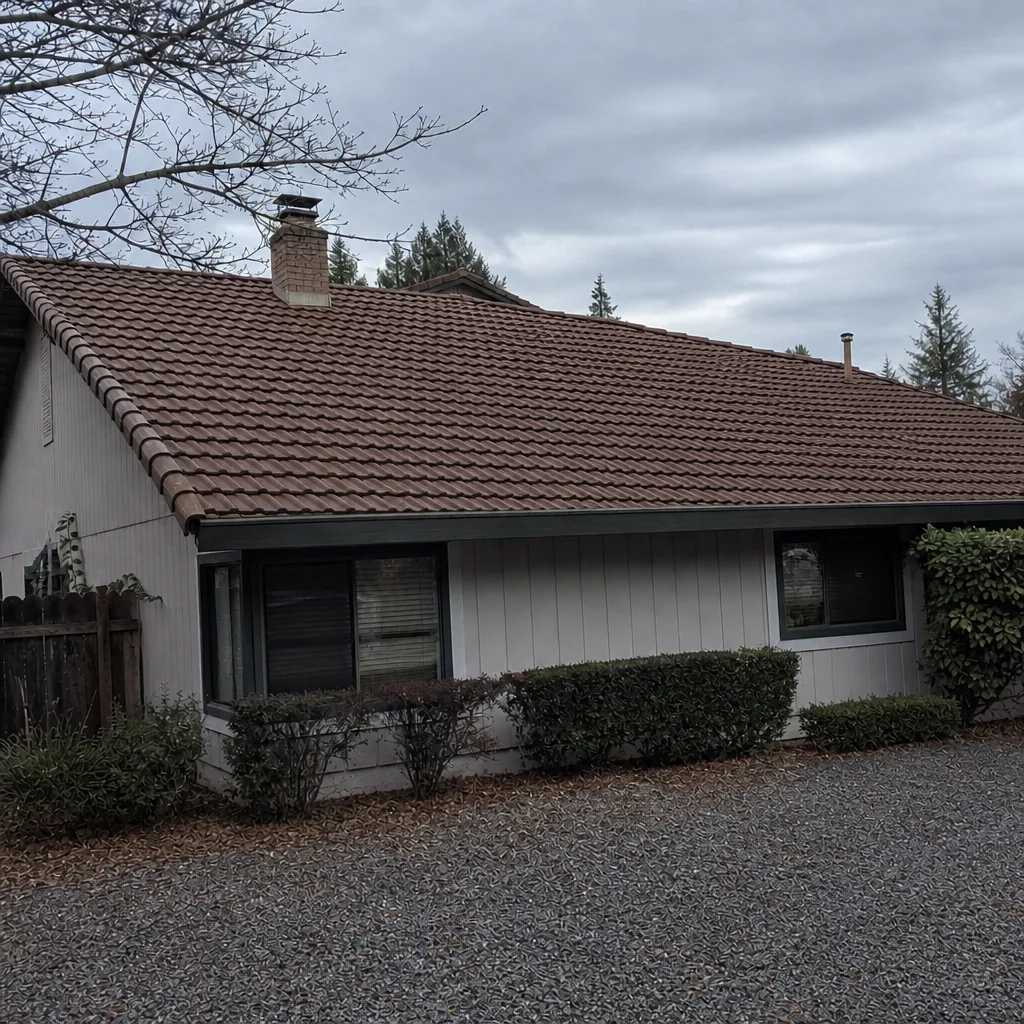
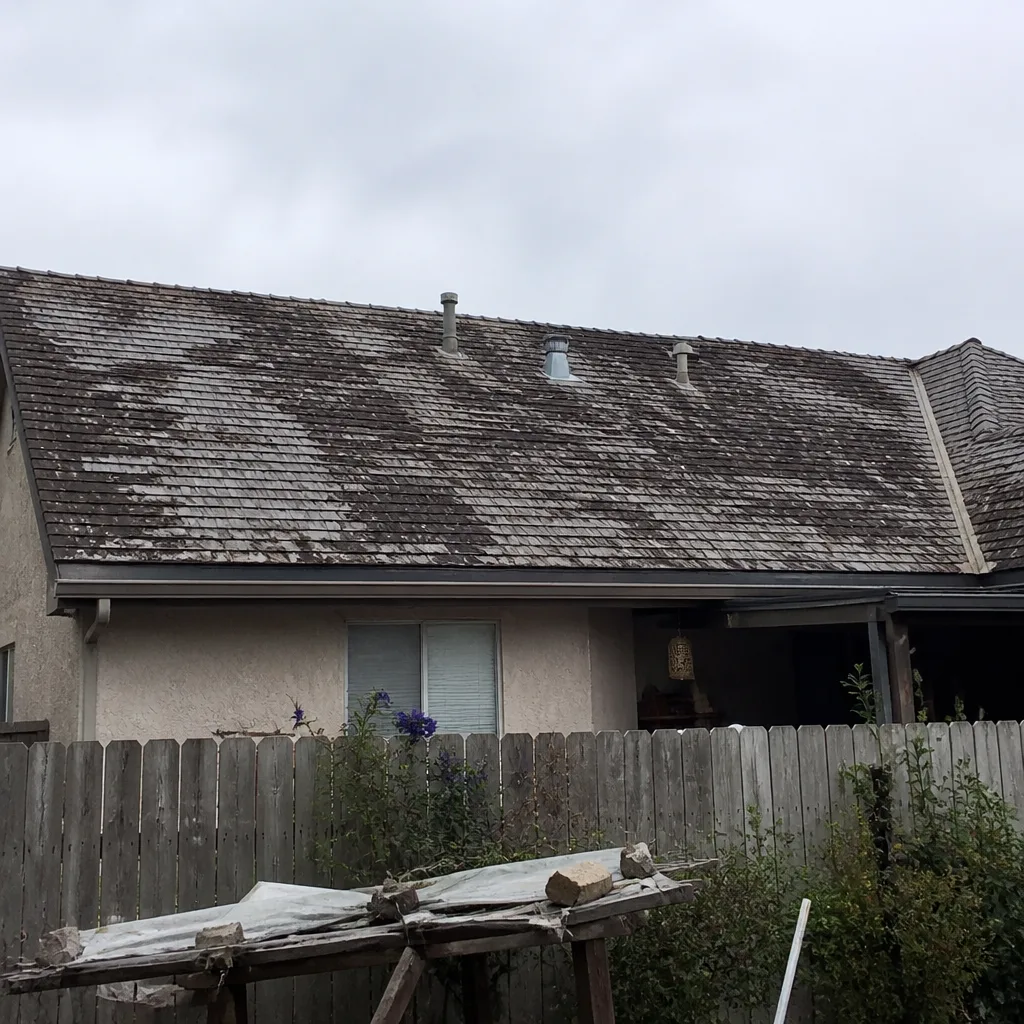
See the difference
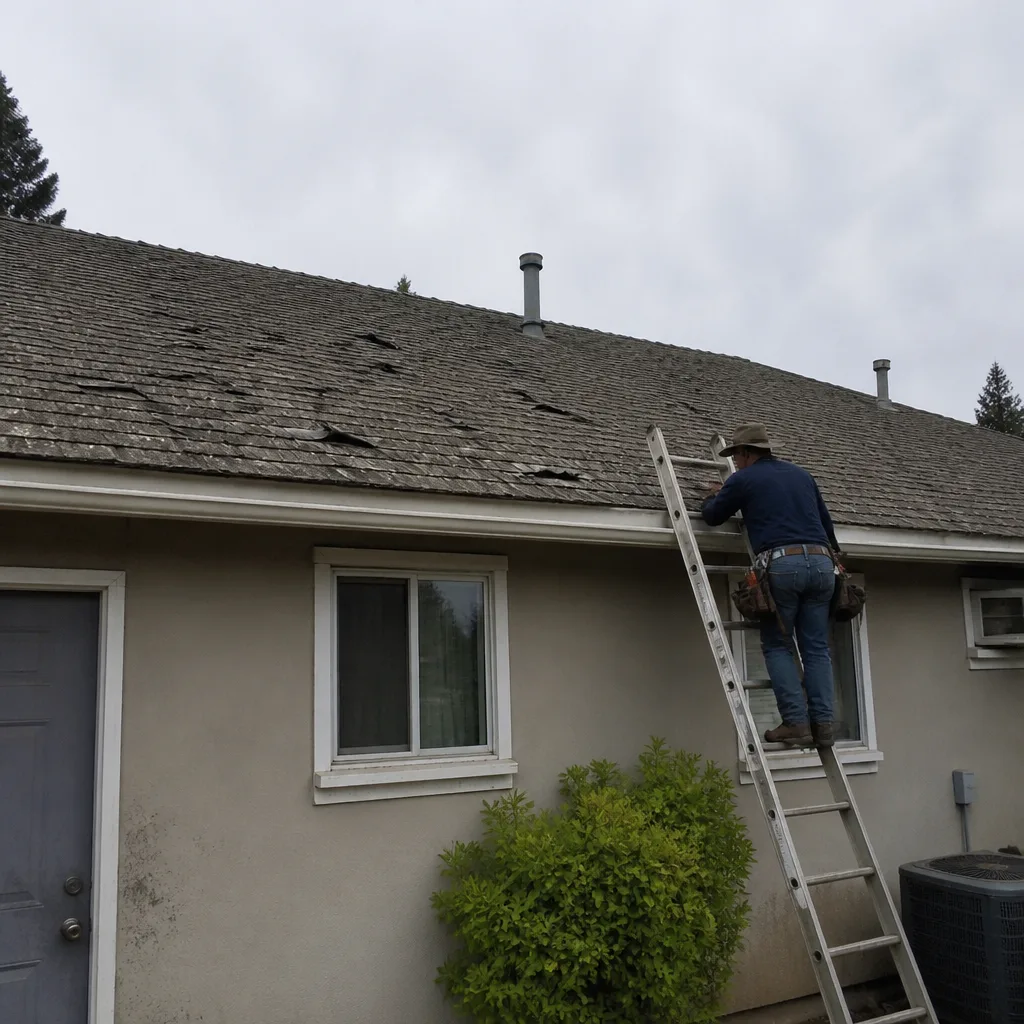 Before
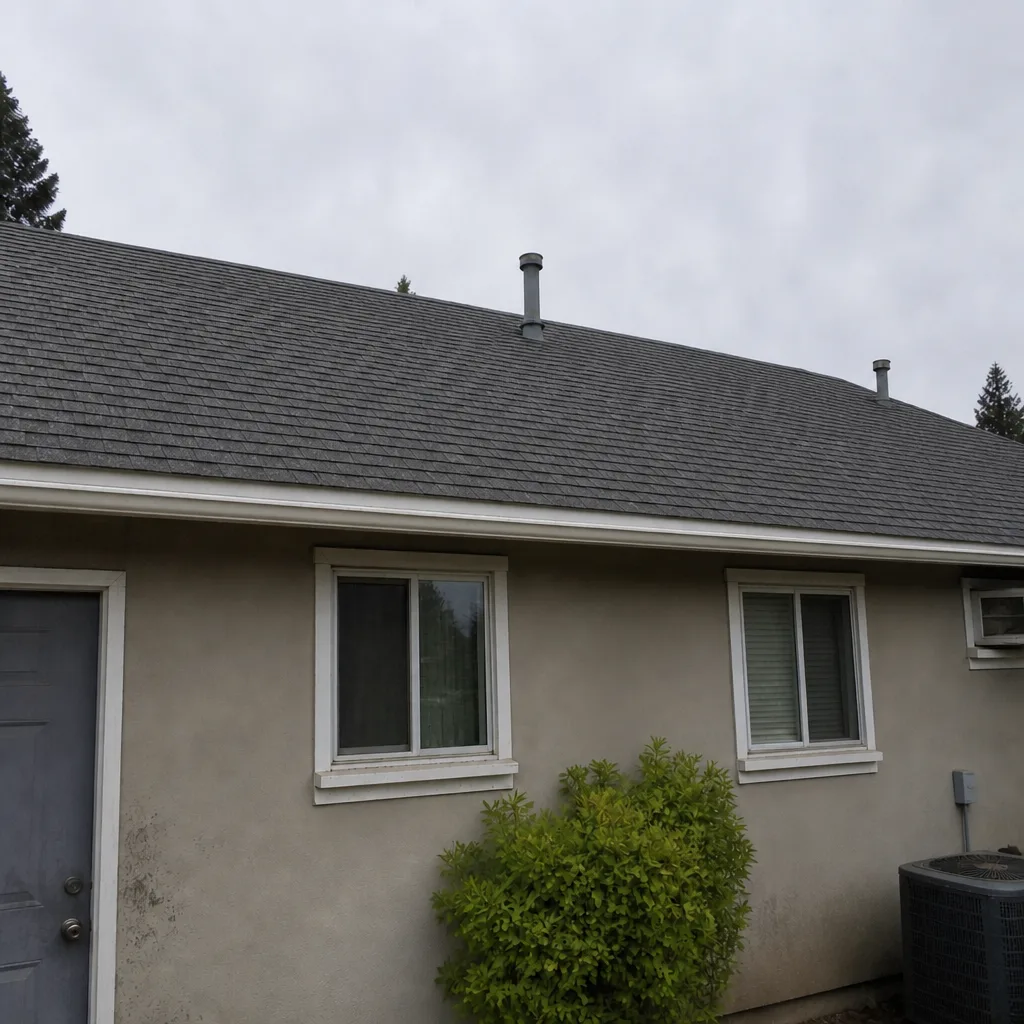 After
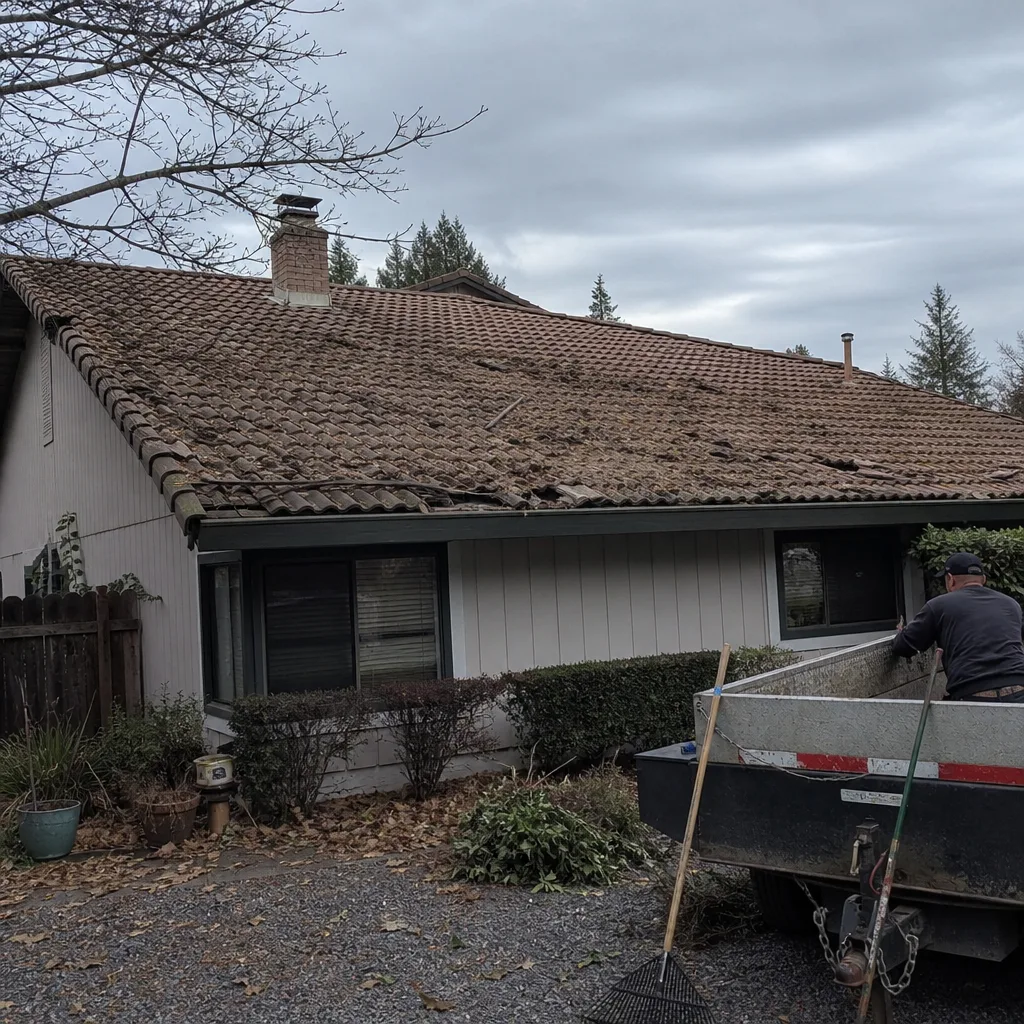 Before
 After
 Before
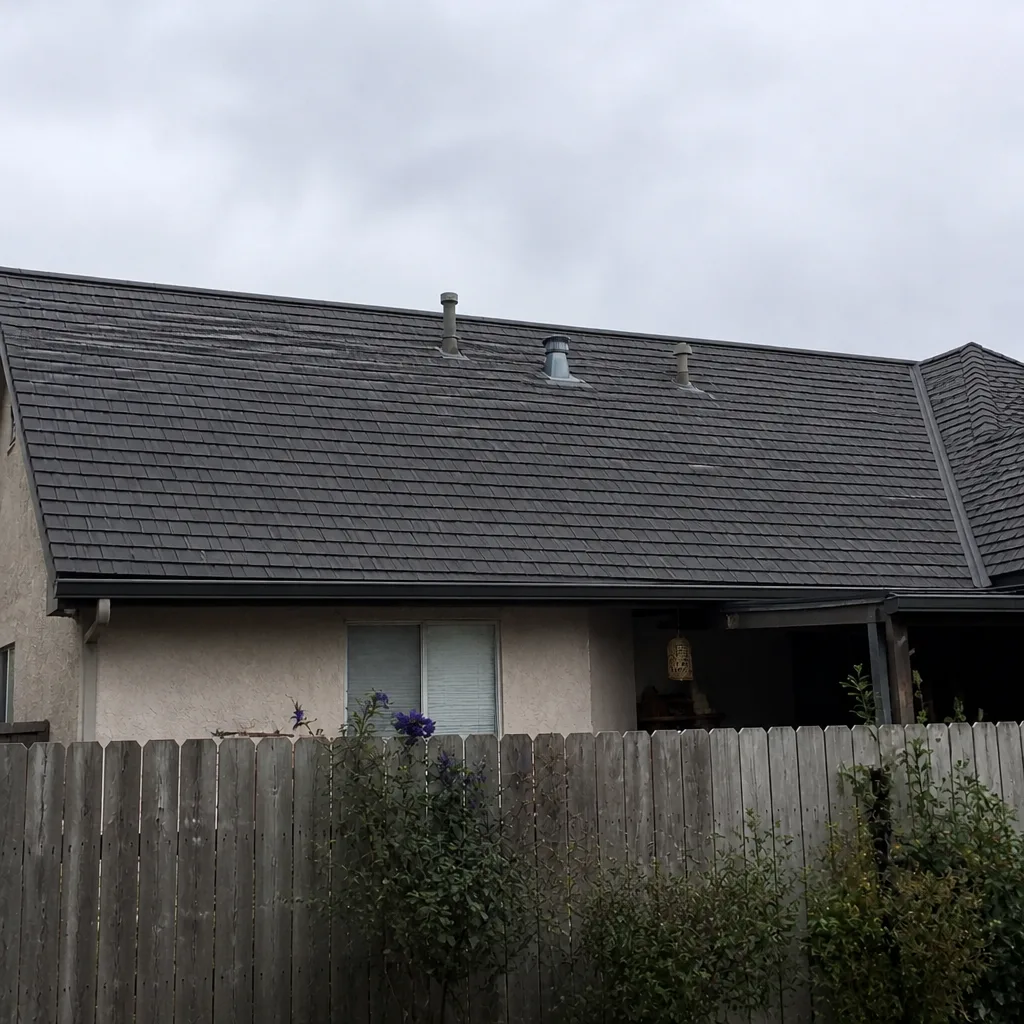 After
When to Call a Professional
Some roof problems are clear from the ground. Some aren’t. Call a professional when you see water stains that return after a repair, when the leak is near a pipe or HVAC curb and the shingles look fine, when the same ceiling spot leaks season after season, or when the roof surface shows widespread damage. Call a professional before you get on the roof yourself. Wexford Roof Repair offers free estimates in Paradise – call (833) 936-2087. We answer 24/7. Fast dispatch from 7am to 7pm, Sunday through Friday. If a call comes in outside dispatch hours, it’s booked into the next opening.
We can also work with your insurer when a covered loss is involved. The phone line is the fastest way to get a straight answer on what’s wrong and what it’ll take to fix it.
Frequently Asked Questions
The most common cause in Paradise is a failed pipe boot or HVAC curb flashing, not a shingle. Dry heat cracks the rubber boots and sealant around penetrations long before the shingles themselves wear out. If you see a stain near a stack or an HVAC unit, that’s the first place to look. Call (833) 936-2087 for a free estimate – estimates are free.
Roof repair cost in Paradise depends on the entry point and scope. A targeted pipe boot or single flashing repair sits at the lower end of the range, while replacing a failed section of shingles or re-flashing a valley or curb costs more. We provide a written, line-item estimate so the price is set before work starts. Call (833) 936-2087 for an exact quote – estimates are free.
Yes. Condensation on a cold surface or an HVAC line can look identical to a roof leak, and in Paradise it’s easy to misread because the air is dry most of the year. The tell is timing: if the stain appears on cool mornings or when the system runs hard rather than during rain, suspect condensation. A professional inspection confirms the source before you spend on a roof repair.
No. The written estimate sets the price, and a proper line-item quote accounts for the entry point and the repair scope. If we find something unexpected when we open up the roof, we stop and discuss it before any additional work. Call (833) 936-2087 to get the estimate started.
Most municipalities require a permit for roof replacement and for some structural repairs, though repair permits vary by jurisdiction. Ask your city’s building department whether your job needs one. We can confirm the permit requirements for your scope and pull the needed permits so the work is inspected and to code. Call (833) 936-2087 for a free estimate.
Most targeted repairs occupy part of a day, while larger flashing or section work can take longer. The timeline depends on the entry points involved and whether the roof is opened up to access the decking. Your written estimate will give you the expected scope and timing. Call (833) 936-2087 for a free estimate.
The Bottom Line
Troubleshooting a roof in Paradise means starting with the causes that actually happen here: heat-cracked sealant, failed pipe boots, cracked HVAC curb flashing, wind-lifted shingles, and installation defects. A ceiling stain is a clue, not a diagnosis. Trace it to the true entry point, confirm with a water test, and only then decide whether to repair a section or replace the roof. Getting that order right is what avoids the $400 repair turning into the $4,000 one. If you want honest, roofing-only eyes on your roof, we can help – Wexford Roof Repair does one thing: roofs. Repair, replacement, and inspection, start to finish. Seven of the industry’s leading brands are on the table so you choose the product, and an inspection that tells you what’s actually wrong is available on its own before you commit to any work.
For a straight answer on what’s happening with your roof, call (833) 936-2087 for a free estimate. We answer 24/7. Fast dispatch from 7am to 7pm, Sunday through Friday.
- Diagnosis comes before repair; the stain and the entry point are rarely in the same spot.
- Penetrations and flashing, not shingles, are the usual culprits in Paradise.
- Granule shedding on new shingles is usually normal release agent, not a defect.
- A second opinion should re-diagnose, not just re-quote.
- Stay off the roof; get a professional on it while you do the safe interior checks.
Written by the team at Wexford Roof Repair.