
Last updated November 15, 2026
 Metal roofing
 Architectural shingles
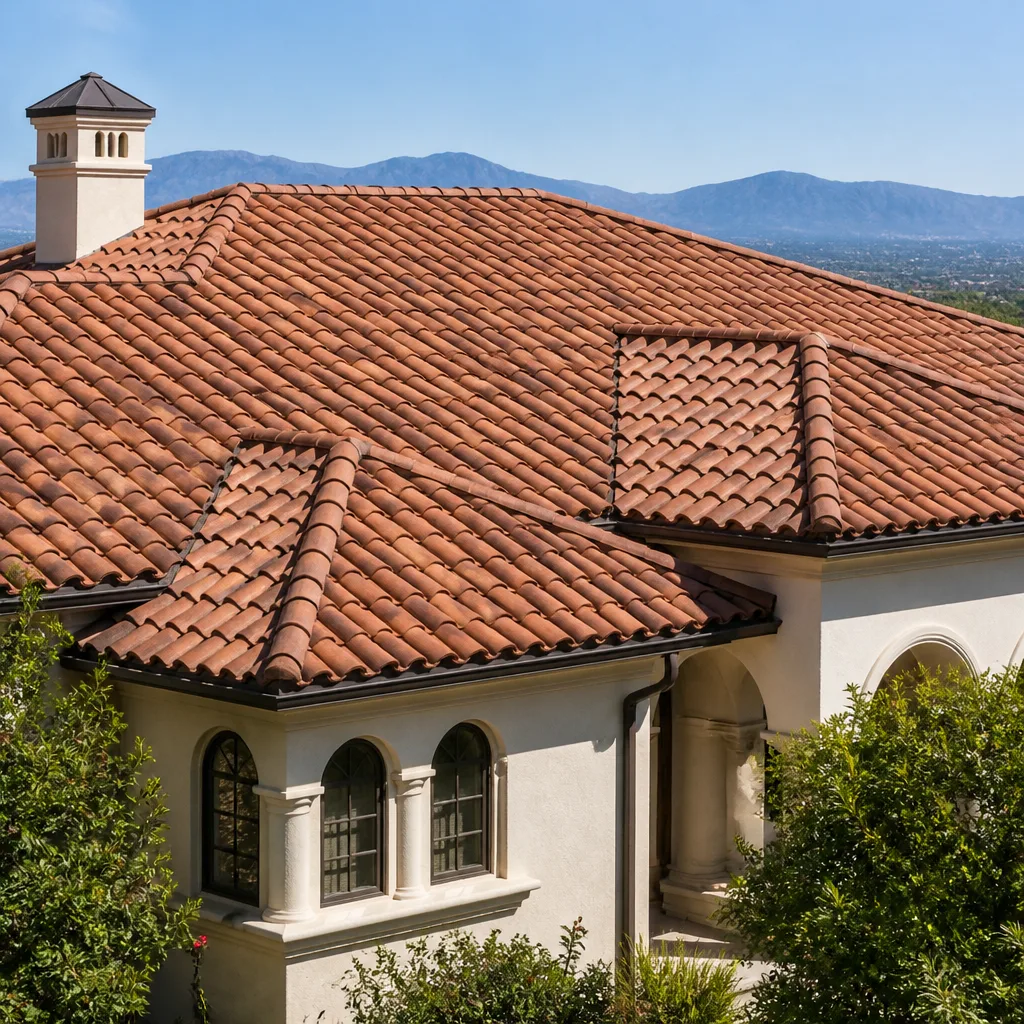 Tile roofing
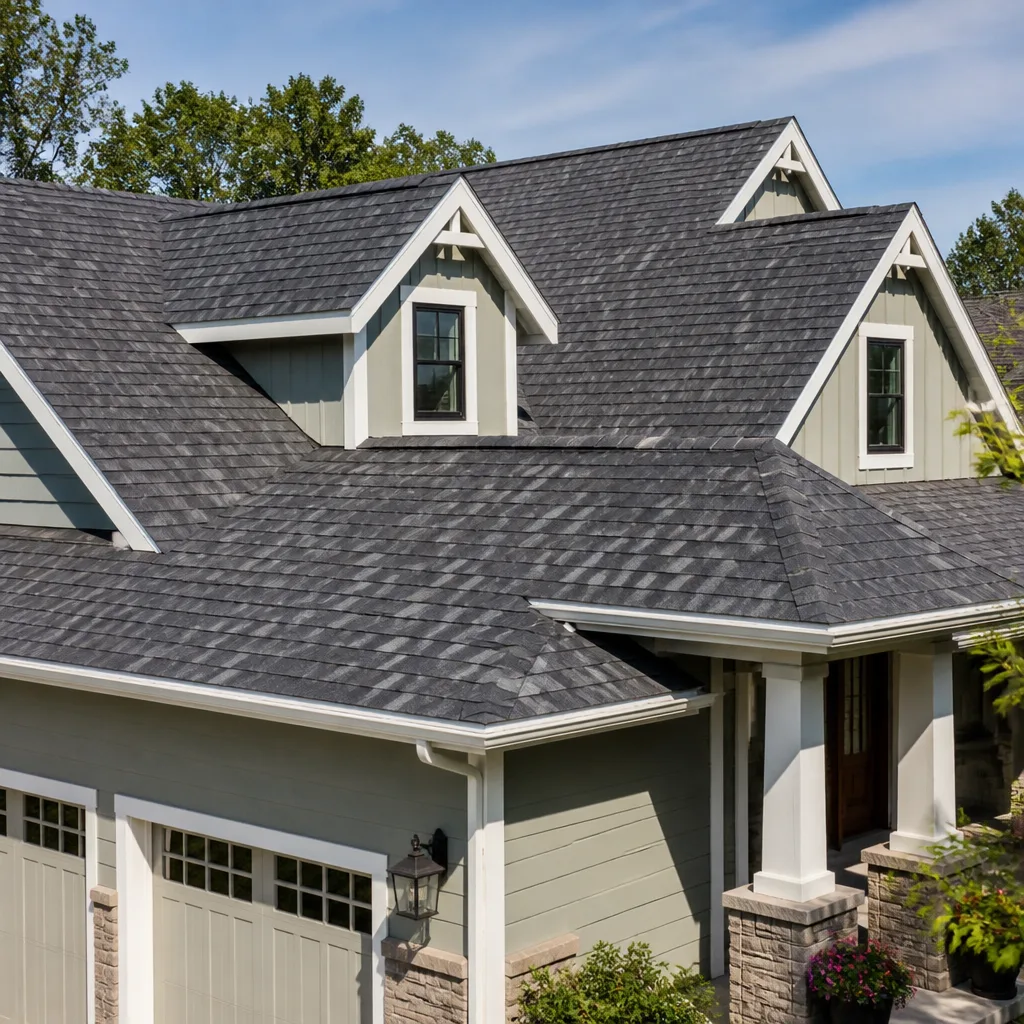 GAF
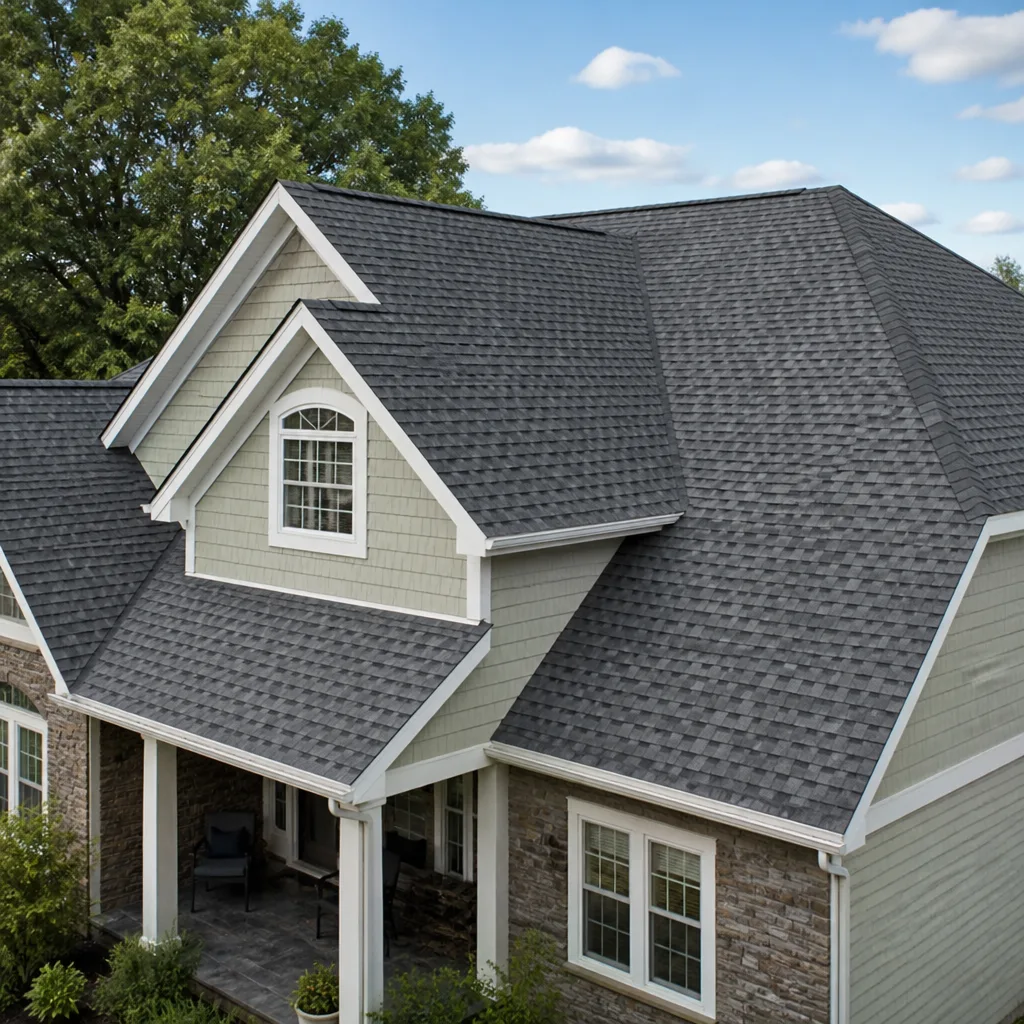 Owens Corning
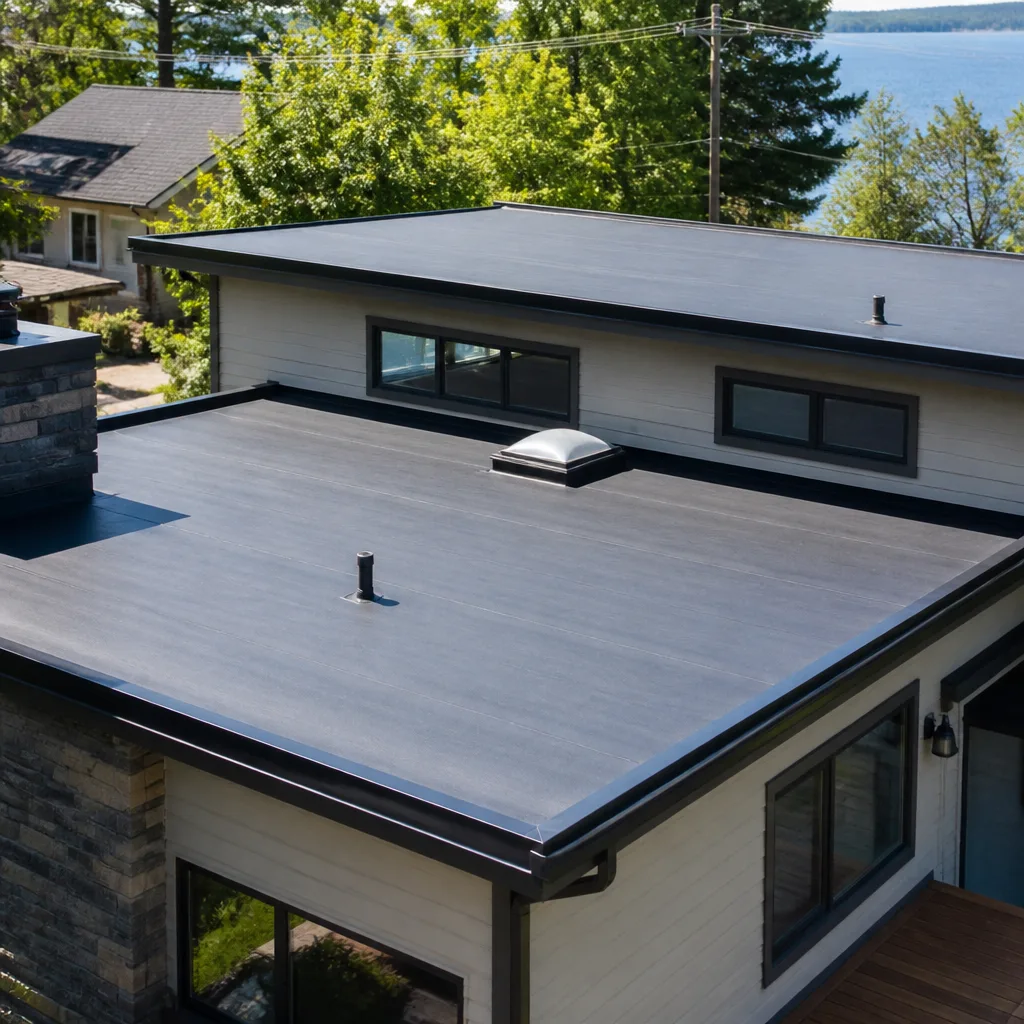 Flat & low-slope
Free roof inspection with deck photos before we talk money - GAF and Owens Corning certified installation
How to Hire a Roofing Contractor in Paradise: A Step-by-Step Guide
Most homeowners hire a roofer based on who shows up at the door first. That’s backward. The right move is to slow the process down and vet the contractor before anyone steps on your roof. Paradise sits in a high-desert valley where intense summer sun, dry heat, and sudden wind events work on shingles year after year, and after a big blow the neighborhood fills with crews from out of state offering rock-bottom prices. Some are legitimate. Plenty aren’t. This guide walks you through a repeatable vetting process – license verification, supplier questions, contract line items – so you can tell a roofing specialist from an opportunist before you sign anything.
Quick Answer
To hire a roofing contractor in Paradise, verify the contractor’s Nevada C-15 roofing license through the Nevada State Contractors Board online portal, confirm they carry insurance, ask which local suppliers they buy from, and get a written line-item contract covering scope, materials by brand and grade, permit responsibility, and cleanup before any deposit changes hands. A roofing-only specialist, not a general contractor moonlighting in roofing, produces fewer callbacks. Get at least three written estimates and treat any price quoted before an inspection with suspicion.
Styles & brands we work with
- Architectural shingles
- Metal roofing
- Tile roofing
- GAF
- Owens Corning
- Flat & low-slope
Table of Contents
- Step 1: Verify the License in Under Two Minutes
- Step 2: Choose a Roofing Specialist Over a Generalist
- Step 3: Ask About Material Suppliers
- Step 4: Know the Contract Line Items Before You Pay
- Step 5: Understand Permits and Inspections
- Step 6: Spot the Paradise Red Flags
- Step 7: Understand the Local Job Timeline
- Common Mistakes to Avoid
- Frequently Asked Questions
Step 1: Verify the License in Under Two Minutes
Nevada requires a specialty contractor license to work on residential roofs, and the state’s Contractors Board keeps a public online portal you can search in about two minutes. The classification you want to see for roofing work is C-15. If a contractor can’t produce a license number that pulls up a valid, active C-15 record, stop the conversation there.
Here’s the two-minute check:
- Get the contractor’s exact legal business name and license number in writing.
- Open the Nevada State Contractors Board online license lookup.
- Confirm the classification reads C-15 roofing. A general contractor license alone does not automatically mean they’re qualified for roofing scope.
- Check the status is active and the license is in good standing – no suspensions or disciplinary flags.
- Confirm the name on the license matches the name on the estimate and the contract.
That last step trips people up. A crew can hand you a glossy flyer for “Paradise Roofing Pro” and then ask you to write a check to a completely different entity. If the names don’t line up, ask why in writing. A contractor who can’t explain it clearly is telling you something. We handle roof repair and roof replacement as a licensed specialty, and we’ll always point you to the state portal so you can confirm for yourself – a legitimate operator has nothing to hide there.
Step 2: Choose a Roofing Specialist Over a Generalist
A roofing-only specialist produces fewer callbacks than a general contractor who also does roofing, and the reason is simple: repetition. A company that installs roofs every single day builds its crews, tools, and processes around one trade. A generalist spreads the same labor across plumbing, siding, and HVAC, and roofing becomes one item on a long menu instead of the whole focus.
That matters in Paradise specifically. The valley’s dry heat and intense UV exposure punish shingles, underlayment, and flashing in ways a contractor who mostly works other trades won’t have internalized. A roofer who works this climate daily knows which materials hold up under direct summer sun and which flashings fail first at valleys and penetrations.
How to tell a specialist from a generalist:
- Ask what percentage of their work is roofing. A specialist answers quickly and high. A generalist hedges.
- Look at their material roster. A real roofer carries relationships with multiple manufacturers and can explain the differences. Wexford Roof Repair installs and works with GAF, CertainTeed, Owens Corning, IKO, Atlas, Tamko, and Boral – seven of the industry’s leading brands, so you choose the product rather than the contractor pushing whatever they stock most of.
- Ask about the crew. Specialists keep crews on roofs, not rotating them across unrelated trades.
Generalist contractors aren’t dishonest, but the depth of a specialist is measurable in callbacks. Ask the question and listen to the answer.
Step 3: Ask About Material Suppliers
A contractor who can’t name their local material supplier is a red flag. Roofing material has to come from somewhere, and a legitimate Paradise roofer has a working relationship with a valley distributor or lumber yard. Supplier relationships say a lot about how a contractor operates: they indicate real volume, current pricing, and access to warranty-backed product lines.
Ask these questions and pay attention to hesitation:
- Where do you source your shingles? They should name a supplier without pausing.
- Which manufacturers do you install? A brand-agnostic roofer gives you real choice – entry-level to premium – rather than steering everything to one line. We work with GAF, CertainTeed, Owens Corning, and Boral, among others, because the right material depends on your roof type, budget, and warranty tier.
- Can you show me product samples and spec sheets? Anyone worth hiring can walk you through shingle grades and warranties in plain terms.
- How do you handle material defects? Manufacturer warranties exist, but installation workmanship is separate. Understand who’s responsible for which.
A storm chaser working out of a hotel lot won’t have a durable local supply arrangement. They buy on the fly, install fast, and leave. If the answers feel vague, treat the supplier question as your early warning.
Step 4: Know the Contract Line Items Before You Pay
No deposit should change hands until the contract spells out exactly what the job includes. Verbal scope and a handshake are how homeowners end up paying twice for the same square of roof. The written contract is your protection, and in Paradise with the volume of post-storm pitching, it’s the difference between a finished roof and a disappearing contractor.
Every roofing contract should contain, in writing:
- Scope of work. Tear-off versus overlay, square footage, ridge and valley work, flashing, and underlayment.
- Materials by brand and grade. Not just “architectural shingles” – the manufacturer, product line, and grade. If it isn’t named, you don’t know what you’re getting.
- Permit responsibility. Who pulls the permit and who’s on the hook for the inspection.
- Payment schedule. Deposits, progress payments, and the final amount owed on completion. Large upfront payments with no milestone structure are a warning sign.
- Cleanup and disposal. Dumpster placement, nail sweeping, and debris removal.
- Timeline and weather clause. A realistic schedule and what happens if weather delays the job.
Read it line by line. If a clause is unclear, ask for it to be rewritten before signing. The price is set per job by the written estimate – if someone offers to “match” a number without ever seeing your roof, that estimate isn’t real.
Step 5: Understand Permits and Inspections
Most cities require a permit for a full roof replacement, and Paradise is no exception – ask your city’s building department directly to confirm what applies to your project. A contractor who waves off permits as optional is telling you they’d rather skip the oversight than stand behind the work.
Permits matter for two reasons. First, an inspection confirms the work meets local code before it’s covered by shingles you can’t easily inspect. Second, an unpermitted replacement can create problems when you sell the home, since the work may not be recognized. In a market where roofs change hands every few years, that’s a genuine liability.
Ask any contractor you’re considering:
- Do you pull the permit, or do I?
- Who schedules the inspection?
- What happens if the inspection fails – who fixes it and at what cost?
A contractor who answers these confidently and in writing is treating you like a partner. One who says permits slow things down and offers to “handle it later” is telling you where the shortcuts live. Walk away.
Step 6: Spot the Paradise Red Flags
After a major wind event, Paradise gets more roofing pitches than usual – and the opportunists come with them. Storm chasers work the same playbook: lowball estimate, high-pressure close, deposit collected, crew gone. Here are the red flags specific to this area:
- Permits presented as optional. A contractor who offers to skip the permit is protecting their schedule, not your roof.
- Price-matching without seeing your roof. Nobody can give you a real number sight unseen. A quote without an inspection is a sales tactic.
- Discounts that expire today. Roofing prices don’t evaporate overnight. Urgency pressure pushes you past the vetting steps.
- Out-of-state plates and vague references. Ask where they’re based and who supplies them. If it’s unclear, it’s a problem.
- No local license lookup. If they won’t give you a name to search on the Nevada Contractors Board portal, the C-15 doesn’t exist.
- Cash only, large deposit. A legitimate contractor accepts normal payment methods and structures payments around milestones.
The pattern behind every red flag is speed. Storm-chasing pitches are built to rush you past the vetting process. Slow the process down and most of them own themselves.
Step 7: Understand the Local Job Timeline
Roof work in Paradise runs on a schedule shaped by the desert. Summer heat can push crews to start early mornings before the surface temperature becomes punishing. Winter is generally the most comfortable season to work a roof, which is also why scheduling can tighten during those months as homeowners catch up on deferred repairs.
A typical job timeline looks roughly like this:
- Inspection. An hour or two on-site to identify leaks, damaged shingles, and flashing failures.
- Written estimate. Line-item scope, materials, and timeline, delivered after the inspection.
- Permit and scheduling. Permit issued, materials ordered, crew scheduled.
- Installation. Most residential replacements run a few days depending on square footage and weather.
- Inspection and cleanup. Final walk-through and disposal.
Ask any contractor how long their jobs typically take in this climate and what weather conditions would delay them. A realistic answer covers heat, wind, and scheduling – not a promise of same-day everything.
Common Mistakes to Avoid
- Hiring on price alone. The lowest estimate is the one most likely to skip permits, cheap out on underlayment, and disappear. Price matters, but scope matters more.
- Skipping the license lookup. It takes two minutes on the Nevada Contractors Board portal. Skipping it means you’ve skipped the single most important check.
- Signing before the scope is in writing. A verbal scope is a handshake, and handshakes don’t cover you when the flashing leaks in a year.
- Paying a large deposit upfront. A big check before materials are ordered invites a disappearing act. Ask for a milestone payment structure.
- Ignoring the supplier question. A contractor who can’t name a local supplier is likely a storm chaser with no durable presence in Paradise.
- Not asking about the crew. A general contractor may send a roofing crew you’ve never met. Ask who’s actually doing the work.
- Assuming permits are someone else’s job. Confirm in writing who pulls it and who schedules the inspection. Unpermitted work can surface at resale.
When to Call a Professional
Some roof issues can wait. Others can’t. Call a professional when you see water stains spreading on a ceiling, when shingles are visibly missing or lifting after a wind event, when granules are piling up in gutters, or when a leak reappears after a previous patch. Age and material condition matter too – a roof past its expected lifespan is a risk in every storm. Don’t climb a steep roof to investigate yourself; the falls are the real danger, not the shingles. Wexford Roof Repair offers free estimates in Paradise – call (833) 936-2087. We answer 24/7. Fast dispatch from 7am to 7pm, Sunday through Friday.
See the difference
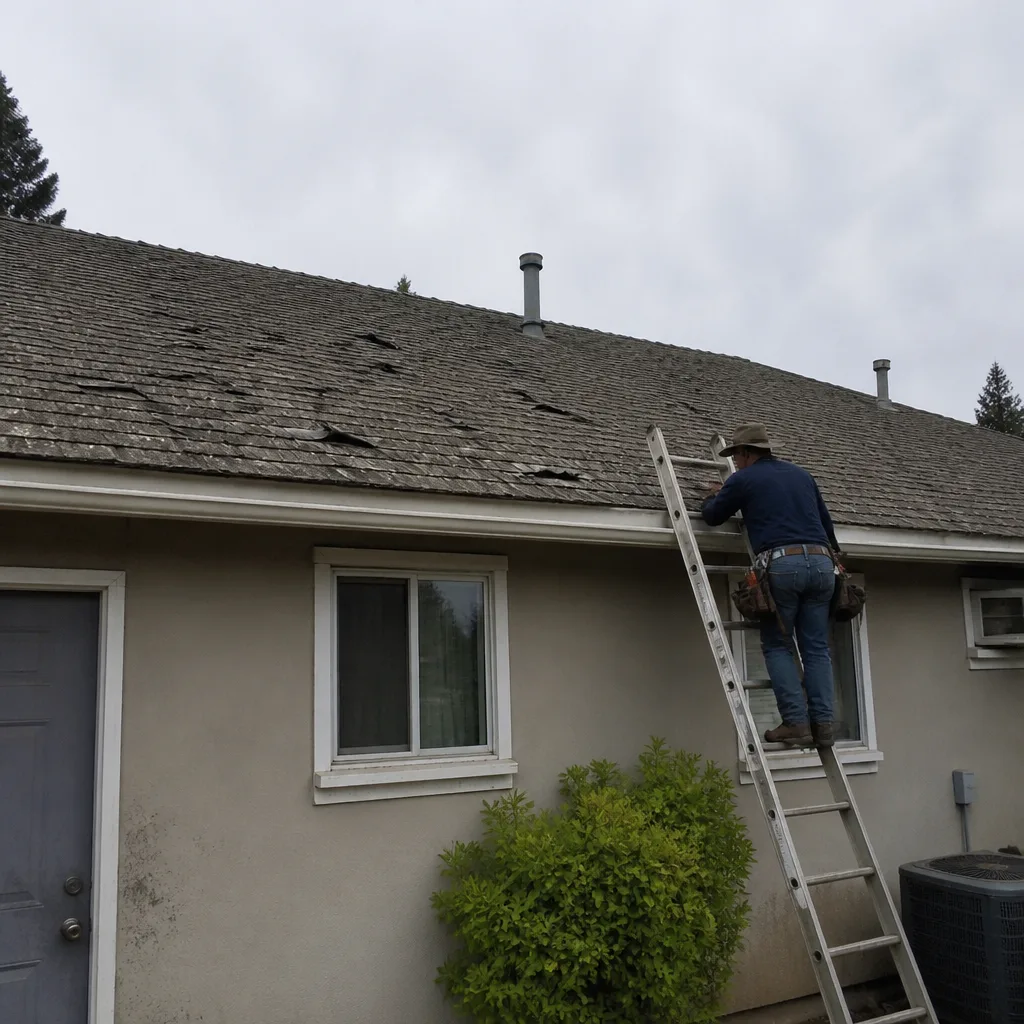 Before
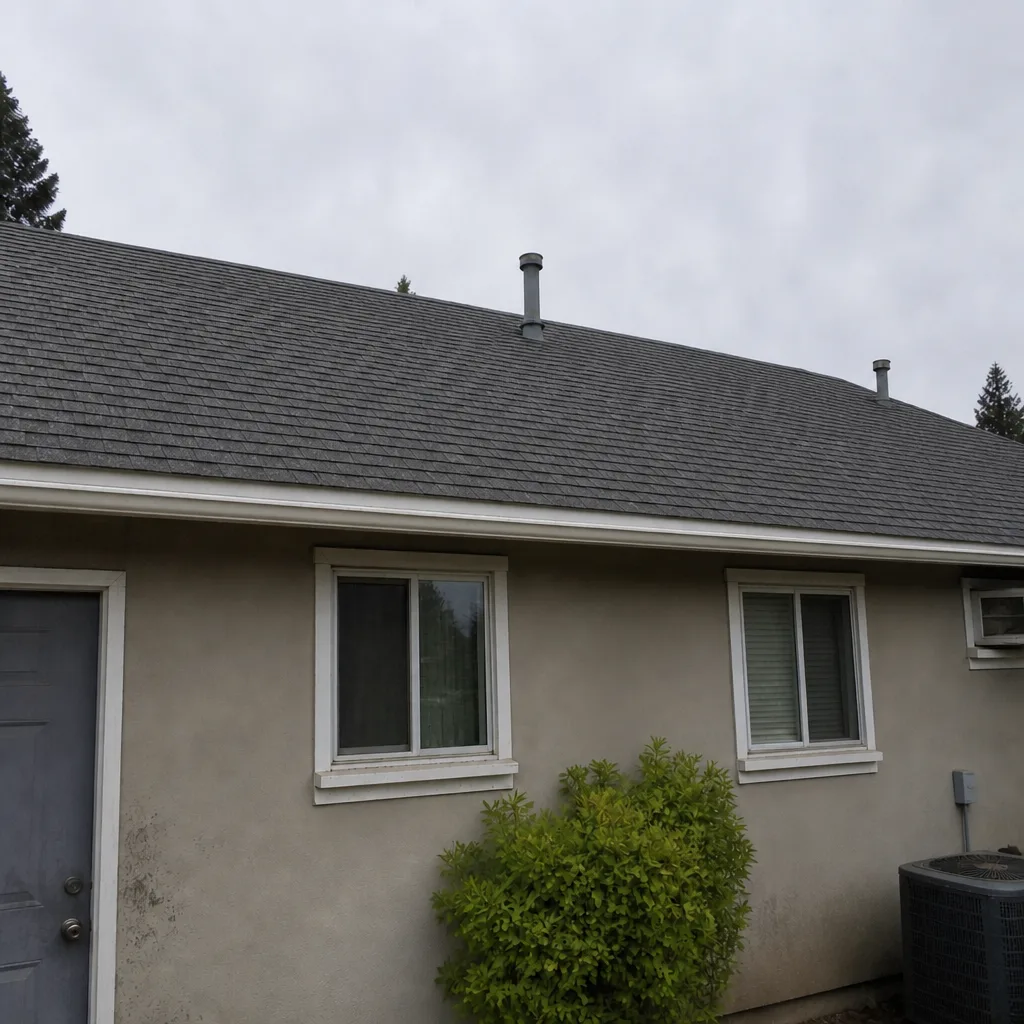 After
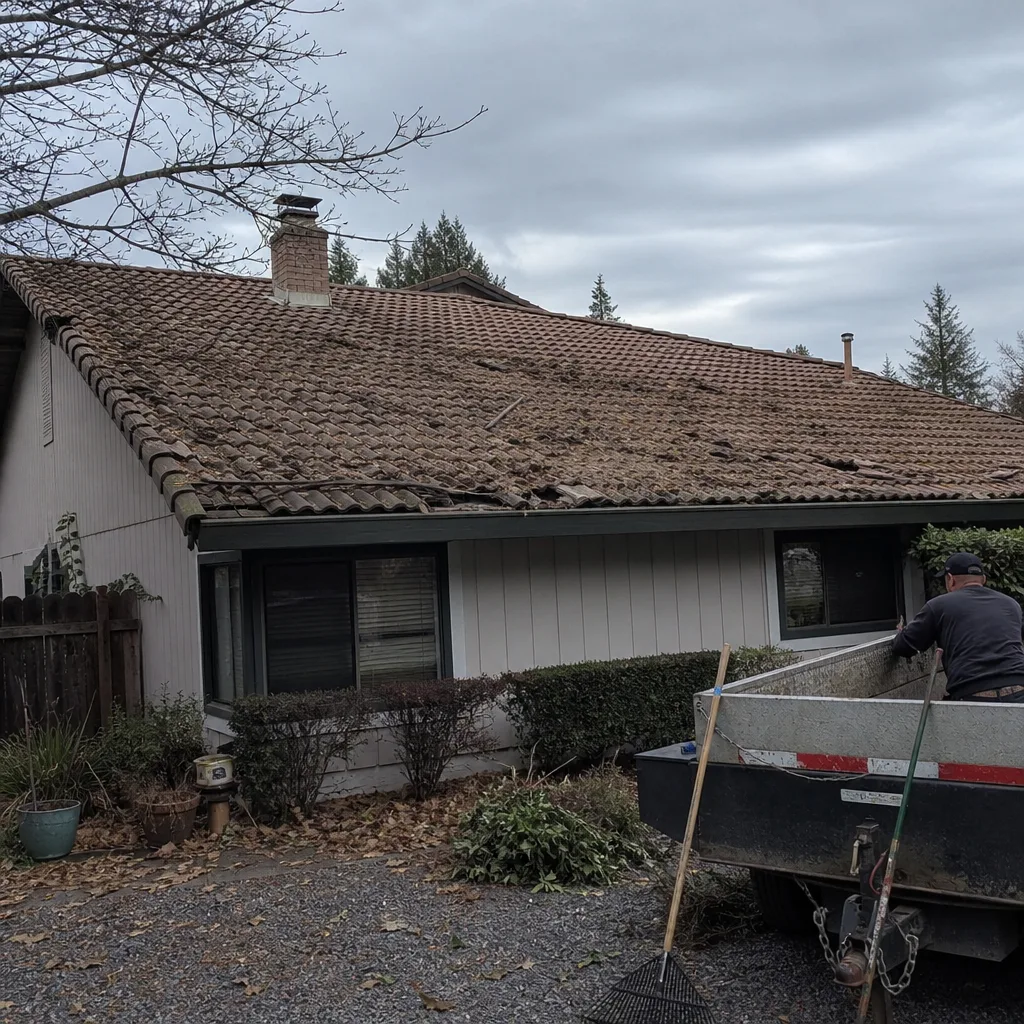 Before
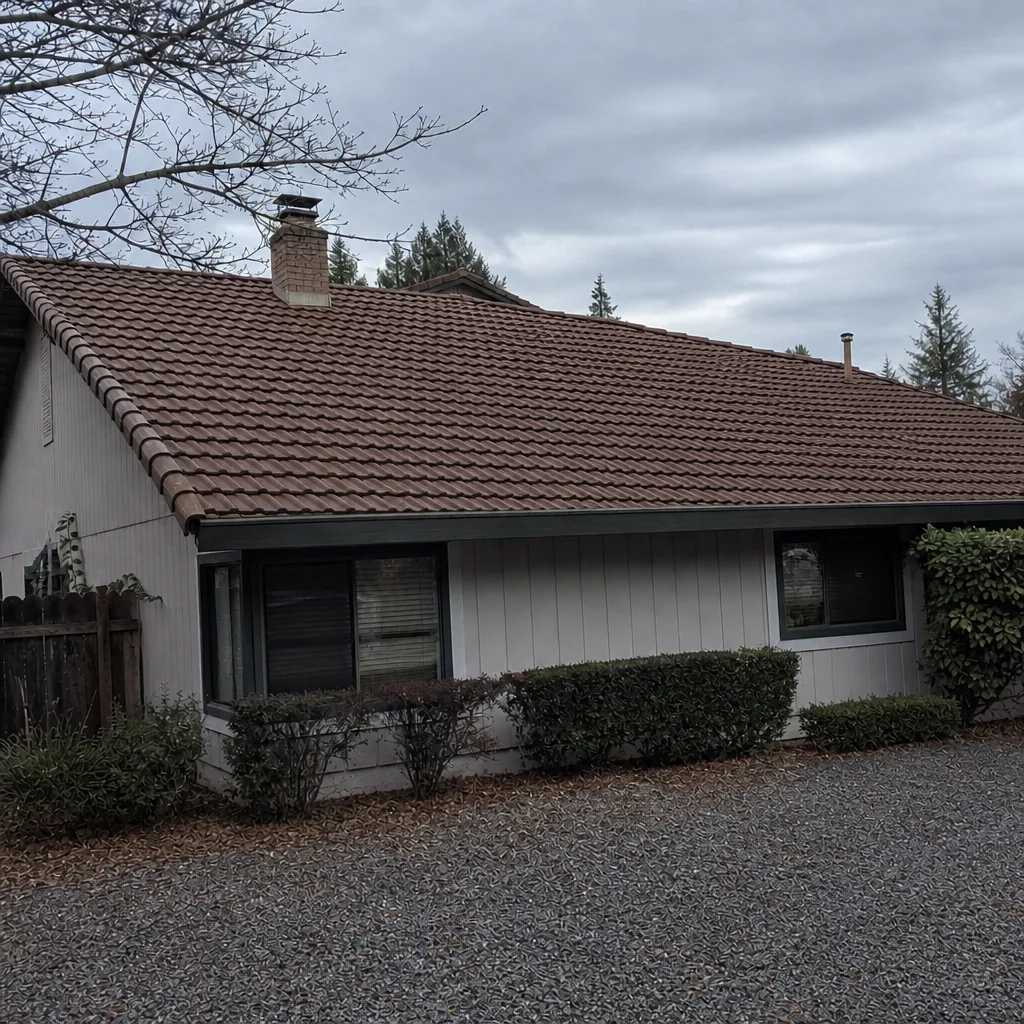 After
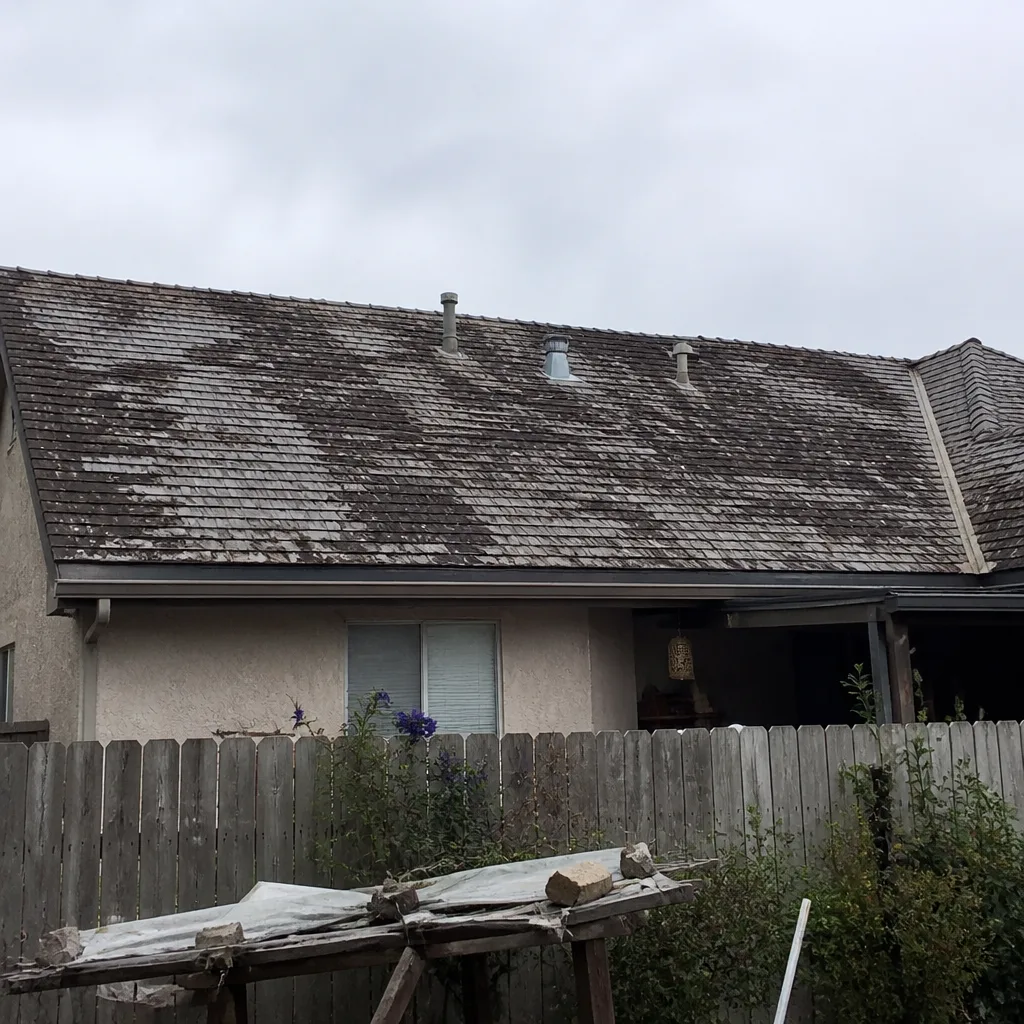 Before
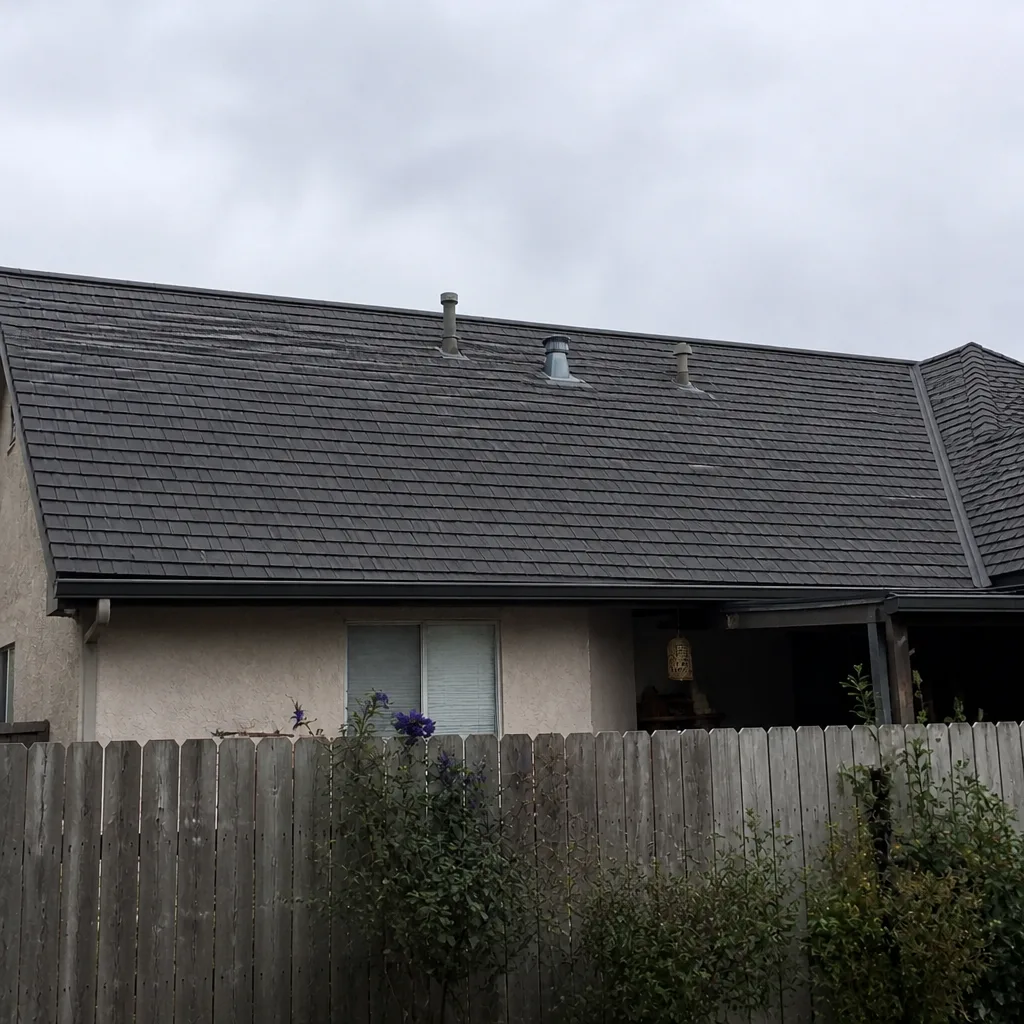 After
Frequently Asked Questions
Costs vary by roof size, material grade, and scope, so there’s no single number that fits every home. A smaller repair on damaged shingles or flashing sits well below a full replacement, and material choice moves the price significantly – entry-level architectural shingles price differently than premium products. Get a written line-item estimate after an inspection. Call (833) 936-2087 for an exact quote – estimates are free.
Use the Nevada State Contractors Board online license lookup. Get the contractor’s legal business name and license number in writing, then search the portal to confirm an active C-15 roofing classification in good standing. Confirm the name on the license matches the contract. Call (833) 936-2087 if you’d like help for your own project in Paradise.
A roofing-only specialist focuses crews and processes on one trade every day, which typically produces fewer callbacks and better long-term performance. A general contractor spreads labor across multiple trades, and roofing becomes one item on a menu. Ask what percentage of their work is roofing – a specialist answers clearly. Call (833) 936-2087 to talk through your roof.
It shouldn’t. A written line-item estimate sets the price for the scope described, and unexpected discoveries – hidden rot, damaged decking – should be documented and approved in writing before additional work begins. Anything else is a change-order gamble. Call (833) 936-2087 for a written estimate before you commit.
Permits for a full replacement are typically pulled by the contractor, but scope varies – confirm who pulls it and who schedules the inspection before signing. A contractor who offers to skip the permit is telling you where the shortcuts live. Call (833) 936-2087 for a free estimate.
Most residential replacements run a few days depending on square footage, material, and weather. Summer heat can push crews to early-morning starts, and winter is often the most comfortable season to work. Ask for a realistic timeline in writing. Call (833) 936-2087 to schedule your estimate.
How Wexford Roof Repair Fits In
We’re a roofing specialist, not a general contractor, and we handle every stage of a roof’s life: inspection to pinpoint the problem, targeted roof repair to extend the life of a salvageable roof, and roof replacement when it’s time to start fresh. We install working materials from seven of the industry’s leading brands – GAF, CertainTeed, Owens Corning, IKO, Atlas, Tamko, and Boral – so you choose the product instead of getting whatever a contractor happens to stock most of. Our technicians have up to 12 years of experience, and every crew works roofs every day. A standalone inspection service is available if you want an honest read on your roof without committing to work. Learn more about us at Wexford Roof Repair, and if you’re nearby, our service area page for Paradise covers how we work here.
The Bottom Line
Hiring a roofing contractor in Paradise comes down to slowing the process down. Verify the C-15 license on the Nevada Contractors Board portal before anything else. Ask about local suppliers and multiple material brands – vague answers are a warning. Get the scope, materials by brand and grade, permit responsibility, payment schedule, and cleanup in writing before any deposit. Choose a roofing specialist over a generalist, and treat every lowball estimate that arrives without an inspection as a red flag. Vetting takes an afternoon. A bad roof takes years to unwind.
Written by the team at Wexford Roof Repair.