
Last updated November 15, 2026
 Metal roofing
 Architectural shingles
 Tile roofing
 GAF
 Owens Corning
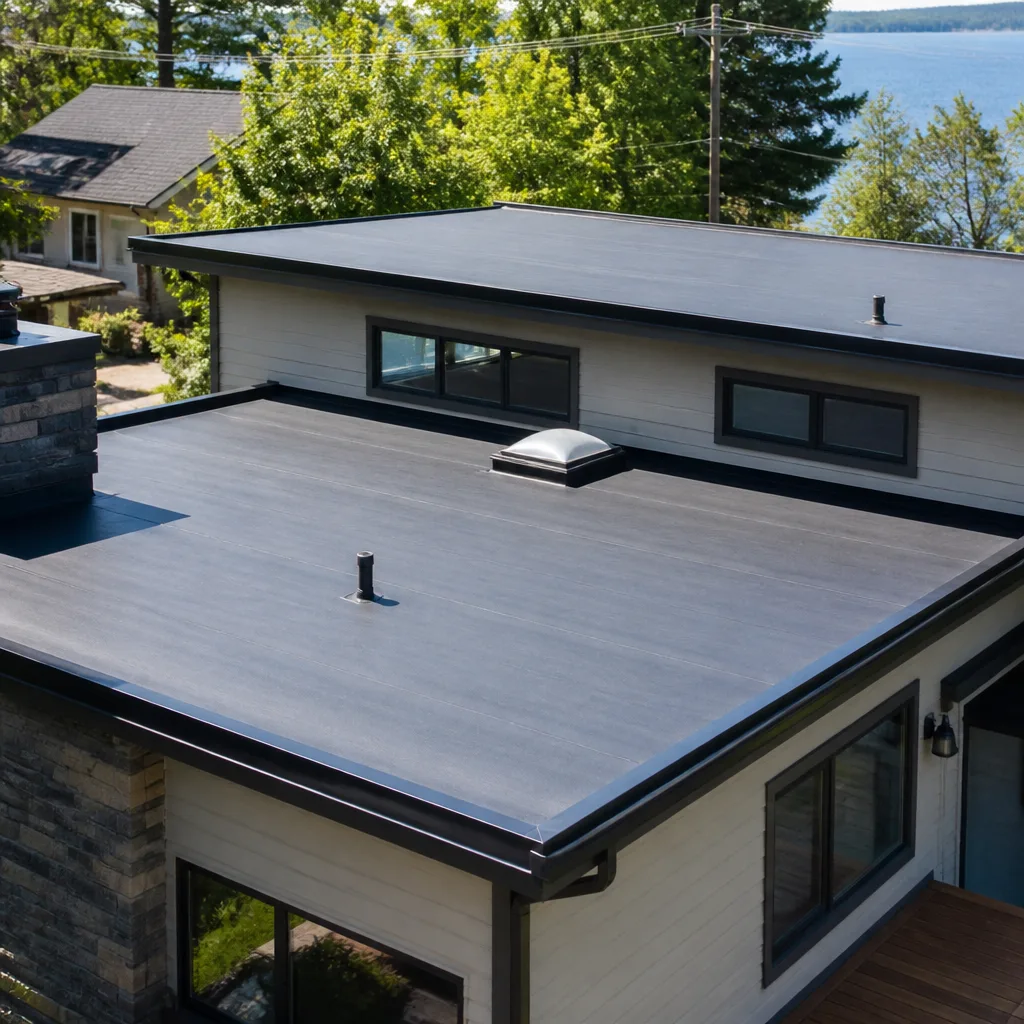 Flat & low-slope
Free roof inspection with deck photos before we talk money - GAF and Owens Corning certified installation
Roofing Warning Signs: A Paradise Homeowner’s Reference Guide
Most warning-sign articles hand you the same seven items: missing shingles, a stain on the ceiling, granules in the gutter. You’ve read that list. It doesn’t help, because the real problem in Paradise isn’t spotting a symptom – it’s knowing which symptoms mean something here. Our high-desert sun, dry summer heat, and hard seasonal temperature swings wear a roof in patterns that don’t match what a coastal or midwestern guide describes. A roof that looks “fine, just aging” on a Paradise home can be two winters from letting water in. This guide walks through the failure patterns we actually see here, how to read them from the ground, and how to sort the “call today” signs from the “schedule an inspection” ones.
Quick Answer
On a Paradise roof, the warning signs worth acting on are accelerating granule loss, blistering or alligatoring on flat and low-slope sections, flashing that has pulled away from pipes and walls, and interior staining that shows up without rain. Significant granule loss on a roof of roughly a dozen years usually means water infiltration is a few years out, not a decade out. One sign – active water coming in during or right after a storm – means call today; the rest can generally wait for a scheduled professional inspection.
Styles & brands we work with
- Architectural shingles
- Metal roofing
- Tile roofing
- GAF
- Owens Corning
- Flat & low-slope
Table of Contents
- Granule Loss: The Gutter Test That Separates Wear From Failure
- Blistering and Alligatoring on Flat Roofs
- Flashing Creep: Catching It From the Ground
- Interior Warning Signs Homeowners Miss
- The Triage Framework: What Means Call Today
- Reading Your Roof Through Paradise’s Seasons
- What a Real Inspection Covers
- Choosing Repair or Replacement
Granule Loss: The Gutter Test That Separates Wear From Failure
Every asphalt shingle sheds granules. That’s normal. The question that matters is how fast, and in Paradise the rate is faster than most homeowners expect because our sun is relentless and rain is infrequent but intense. A shingle that loses its protective granule coating has nothing left to shield the asphalt underneath from ultraviolet light. Once the asphalt dries and cracks, the mat beneath it starts to fail.
You don’t need to climb up to judge this. Here’s the gutter test we recommend:
- After a dry stretch, scoop a handful of debris from a downspout or the gutter channel below a slope.
- Look for a heavy concentration of sand-like granules – the texture of coarse sand, gray, black, or the color of your shingles.
- Compare gutters on different sides of the house. A south- or west-facing slope shedding far more than a shaded one tells you sun exposure is driving wear.
- Check whether you can see the shingle’s fiberglass mat – a woven, cloth-like texture – on any exposed edge or ridge. Bare mat means the granules are gone, not just thinning.
On a newer roof, light granule shedding in the first year or two is normal and settles down. On a roof around twelve years old in Paradise’s UV environment, a steady, heavy accumulation in the gutters is a signal that the surface is at the end of its useful life much sooner than the “twenty to thirty years” you may have been told at installation.
What to watch for specifically: granules pooling in one concentrated area below a single slope, bald patches where the mat shows through, or granules you can rub off with your thumb. Those point to accelerated loss rather than normal aging, and accelerated loss on a Paradise roof is worth a professional look before the next monsoon season.
Blistering and Alligatoring on Flat Roofs: Why They’re Urgent Here
Flat and low-slope roofs – common on additions, patios, and parts of many Paradise homes – fail differently than shingles. Two patterns matter most: blistering and alligatoring. Both are heat-driven, and Both are heat-driven and become urgent faster in a climate that pushes surface temperatures high for months.
Blistering shows up as raised, bubble-like areas where trapped moisture or air has pushed the membrane away from the deck. Alligatoring is a cracked, scaly surface that looks like dried mud or reptile skin – the top layer has lost its oils and elasticity and split into a pattern of cracks.
Here’s the visible progression we look for, in order:
- Stage 1 – surface dulling. The coating or cap sheet looks chalky and loses its sheen. No cracks yet.
- Stage 2 – hairline checking. Fine surface cracks appear, still shallow and tight.
- Stage 3 – the alligator pattern. Cracks connect into a visible network. The membrane is drying out and losing flexibility.
- Stage 4 – open splits and blisters. Cracks widen, blisters lift, and the deck or insulation beneath can begin to take on water.
- Stage 5 – active leak. Water is now finding its way inside.
Stage 1 and 2 can often be addressed with maintenance or a recoat. Stage 3 is the fork in the road – a roof repair conversation. By stage 4, you’re usually looking at a section or full replacement because the membrane’s lifespan is spent. On a Paradise flat roof, don’t wait for the leak at stage 5; the sun moves you through these stages quicker than intuition suggests.
Flashing Creep: Catching It From the Ground
Flashing is the metal that seals the seams around penetrations – chimneys, vent pipes, skylights, and where a roof meets a wall. Thermal expansion is its quiet enemy. In Paradise, roofs heat and cool through a wide range every day, and over years the metal literally walks: it creeps, lifts, and separates from the sealant and the surface it was meant to protect.
You can often spot flashing creep from the ground with binoculars or a phone zoom. Here’s what to look for:
- Lifted edges. The base of a vent-pipe flashing sitting visibly above the shingles rather than tight against them.
- Exposed fasteners. Nail heads or screws visible outside the sealed area, which is where water starts.
- Cracked or missing sealant. A dark line or gap where the old caulk or mastic has dried and pulled away.
- Rust streaks or staining. Brown trails running down from a penetration mean water is already traveling where it shouldn’t.
- Chimney and wall flashing angles. Counter-flashing that has pulled out of a mortar joint or siding, leaving a gap you can see as a shadow line.
This is one of the highest-value warning signs to catch early, because flashing failure is a common source of interior leaks that get blamed on “the shingles” when the shingles are fine. A quick professional inspection can tell you whether creeping flashing is a small reseal-and-replace job or a sign that the whole system around it has gone soft.
Interior Warning Signs Homeowners Miss
Not all warning signs are on the roof. Some of the most important ones are inside, and they’re easy to misread. In Paradise, dry indoor air and heavy cooling use make homeowners blame the HVAC system for stains that are actually early roof infiltration.
Common misreads:
- Ceiling discoloration near an air handler. A faint brown ring or water stain near a vent might look like condensation from the AC. If it appears on an exterior-wall side of the room or spreads, suspect the roof above.
- Peeling paint or bubbling drywall. Often written off as a paint problem. In a ceiling or upper wall, it’s frequently moisture from above.
- Musty smell in a bedroom or closet. Attributed to “old house smell.” It can be a slow leak wetting insulation and framing in the attic.
- Stains that appear after a storm, then dry. Because Paradise rain comes in bursts, a stain may only show up a day after weather. Note the timing.
- Daylight or discoloration in the attic. From inside the attic, look for light at the roof deck, dark water trails on rafters, or sagging sheathing.
The tell is location and recurrence. HVAC condensation usually shows up around vents and ductwork; a roof issue tends to appear near exterior walls, ceilings under a slope, or the top of a room. If a stain returns after each rainy stretch, that’s your answer. Get it looked at before it spreads – Wexford Roof Repair treats an inspection as a standalone service, so you can find out what’s actually wrong before committing to any work.
The Triage Framework: What Means Call Today vs. What Can Wait
This is the part most guides skip. You don’t need to panic over every symptom, and you don’t want to dismiss the one that matters. Here’s how to sort them.
Call today:
- Water actively coming into the house during or right after a storm.
- A section of roof visibly sagging or a large area of shingles missing after wind.
- Daylight visible through the roof deck from inside the attic.
- Any sign the roof has been compromised enough that people or belongings could be at risk.
Schedule an inspection soon – typically within a few weeks:
- Heavy granule accumulation or bald spots on shingles.
- Blistering or alligatoring in stage 3 or beyond.
- Flashing that has visibly pulled away or sealant cracks.
- Interior stains that appear only after rain, with no active dripping.
- A roof past the midpoint of its expected lifespan with any of the above.
Watch and note:
- Light, even granule shedding on a newer roof.
- A single minor hairline crack on a flat roof that isn’t growing.
- One old, dried stain that hasn’t changed in years.
If you’re unsure which bucket you’re in, that itself is a reason to get eyes on the roof. Call (833) 936-2087 and we’ll help you decide whether an inspection makes sense. We answer 24/7. Fast dispatch from 7am to 7pm, Sunday through Friday.
Reading Your Roof Through Paradise’s Seasons
A roof in Paradise lives through a specific cycle, and each season stresses different parts of the system. Knowing the cycle tells you when to look and what to look for.
- Spring and early summer. Intense sun and climbing heat are already drying out sealants and flexing metal. This is when flashing creep accelerates and flat-roof alligatoring deepens.
- Summer. Surface temperatures peak, driving the daily expansion-contraction cycle that loosens fasteners and opens seams. Granule loss on sun-facing slopes runs fastest now.
- Monsoon and storm stretches. Sudden, heavy rain finds every weakness that opened earlier in the year. This is when interior stains first appear. Check ceilings and attic after each storm.
- Fall and winter. Cooler nights mean contraction, and the freeze-thaw swings at higher elevation edges work on cracks and loose flashing. It’s a good window to get repairs done before the next hot season.
The takeaway: in Paradise, the signs show up in the hot and dry months, but the damage reveals itself when it rains. If you inspect or have a roof inspected in late spring, you’re catching problems before the wet season tests them.
Our technicians have up to 12 years of experience reading these patterns on roofs of all ages and pitches. If you’re in Paradise and any of the above rings true, a professional inspection removes the guesswork.
What a Real Inspection Covers
An inspection is only useful if it tells you what’s actually wrong – not what costs the most to fix. A proper roof inspection covers the whole system, inside and out. Here’s what it should include:
- A ground-level look for obvious issues – missing shingles, sagging, gutter condition, and staining from below.
- A roof-surface walk to check granule loss, shingle condition, flashing, and penetrations up close.
- An attic review for water trails, damp sheathing, daylight, and insulation condition.
- Flashing and penetration checks at every pipe, chimney, skylight, and wall junction.
- A clear written summary of what’s failing, what’s aging but sound, and what can wait.
We offer roof inspection as a standalone service, with no obligation to repair or replace anything. That matters if you’ve been told by a sales-driven visitor that your roof is “shot” – a second opinion from a specialist is worth having. If repair is the right call, we can do that. If replacement is, we’ll say so plainly. Learn more about the full scope of our roof replacement work when the time comes.
Choosing Repair or Replacement – and What Materials Fit
The warning signs tell you something is wrong. The next decision is whether to repair or replace, and it’s driven by three factors: the age of the roof, how much of it is affected, and whether the underlying deck and structure are sound.
Repair usually makes sense when the damage is localized – one bad flashing, a damaged slope, a single failed section of flat roof. Replacement becomes the smarter investment when wear is widespread, when repairs would stack up to a large share of replacement cost, or when the roof has reached the end of its material lifespan.
Material choice matters in Paradise’s climate. Because sun exposure drives so much wear here, the right product for your roof and budget is worth weighing carefully rather than defaulting to whatever a contractor prefers to install. We install materials from seven leading manufacturers – GAF, CertainTeed, Owens Corning, IKO, Atlas, Tamko, and Boral – so you’re choosing the product, not accepting the only option in the truck. That ranges from entry-level to premium tiers, in different profiles and colors. If you’d like to understand material options before committing, our overview on the Wexford Roof Repair homepage is a good place to start.
Common Mistakes to Avoid
- Treating every granule in the gutter as “normal wear.” On a roof around a dozen years old in Paradise, heavy loss is a signal, not routine aging. Read the concentrated deposits, not the scattered ones.
- Waiting for a leak before acting on flat-roof cracks. Alligatoring at stage 3 is the moment to plan repair. Waiting for stage 5 means the membrane’s lifespan is spent and the cost goes up.
- Blaming interior stains on the HVAC. A recurring stain after every rain is the roof, near an exterior wall or under a slope. Note the pattern before assuming it’s condensation.
- Letting a general contractor “take a look.” Roofing is a specialty. A generalist works on many things – a roofing specialist works on roofs, every day, and knows the failure patterns that matter in this climate.
- Relying on a sales visit for a diagnosis. An inspection that exists only to sell a replacement isn’t an inspection. Ask for a written summary of what’s wrong and what can wait.
- Skipping the flashing check. A roof can have sound shingles and installed-to-fail flashing. Thermal expansion in Paradise makes this one of the most common hidden leak sources.
- Ignoring the attic. Many early warnings – damp sheathing, daylight, water trails – are invisible from the ground and only show up inside the attic.
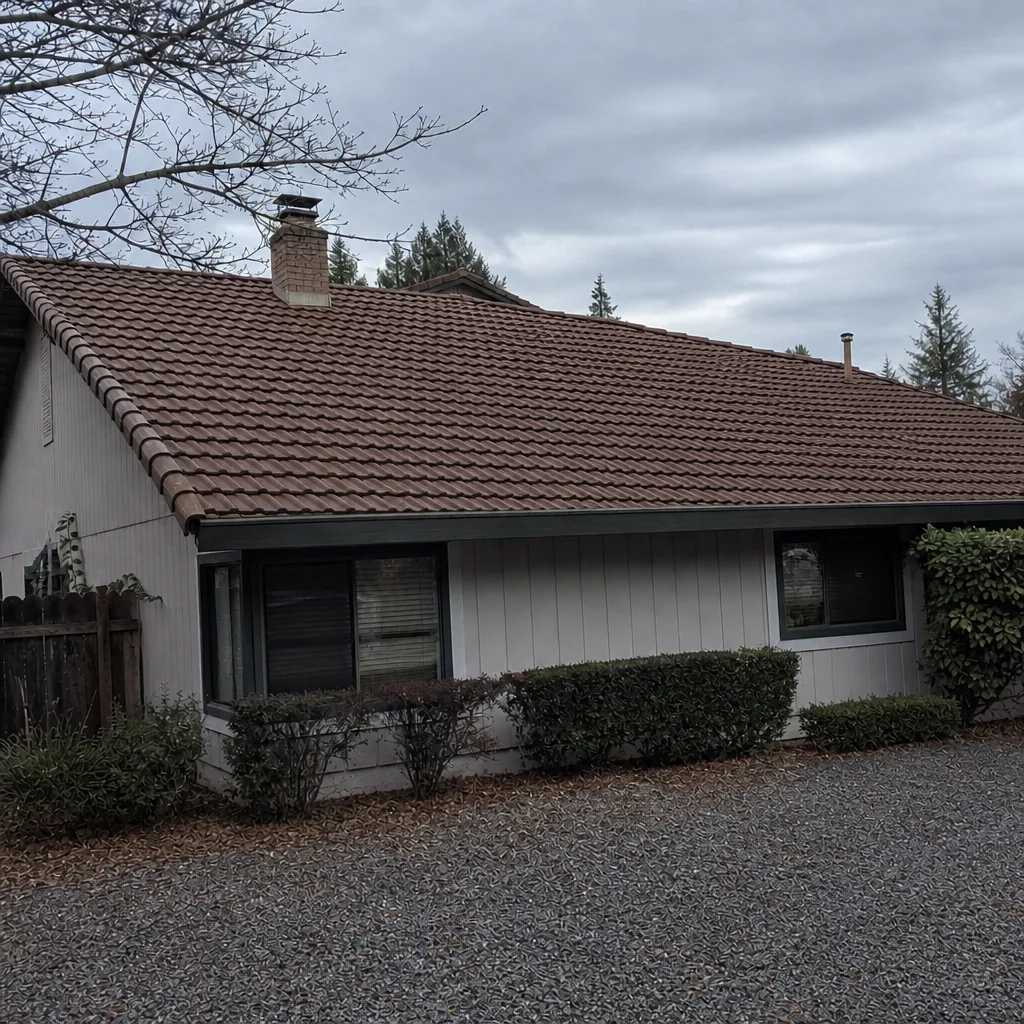
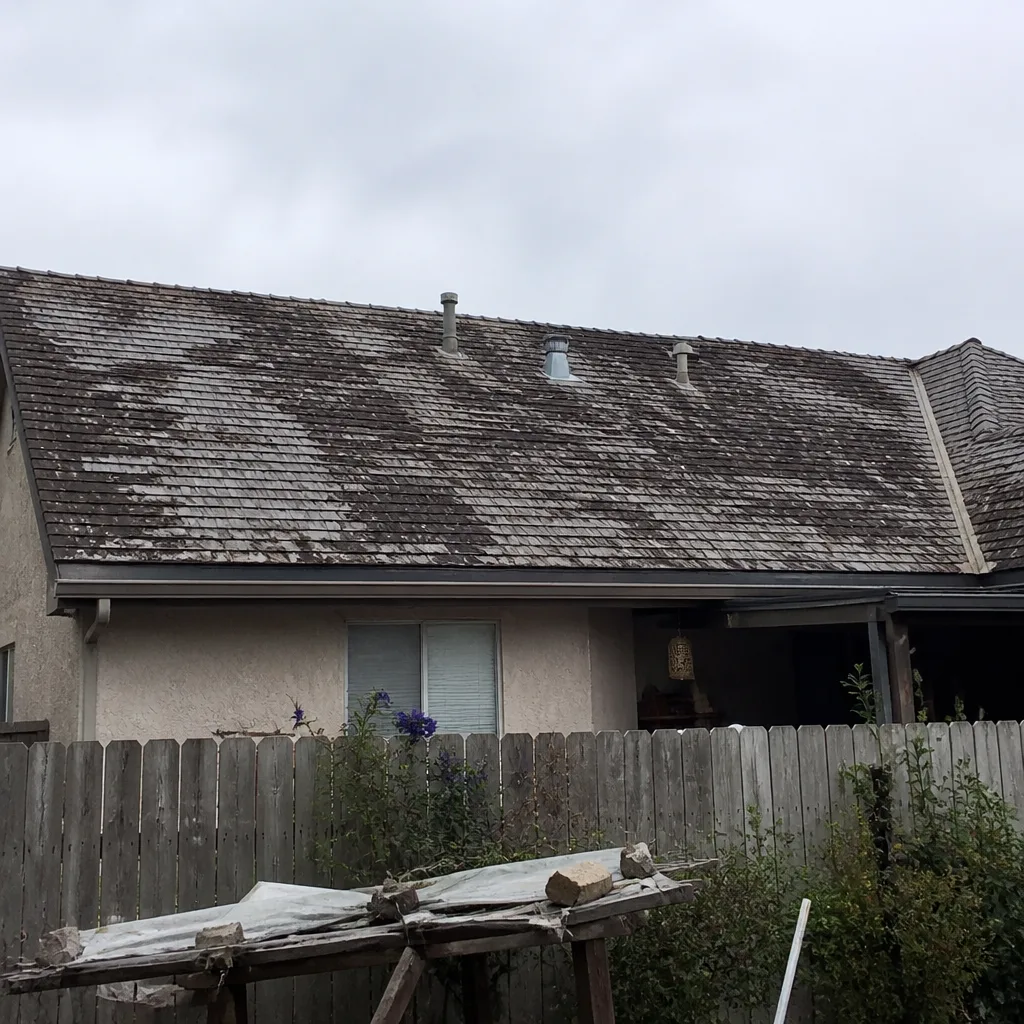
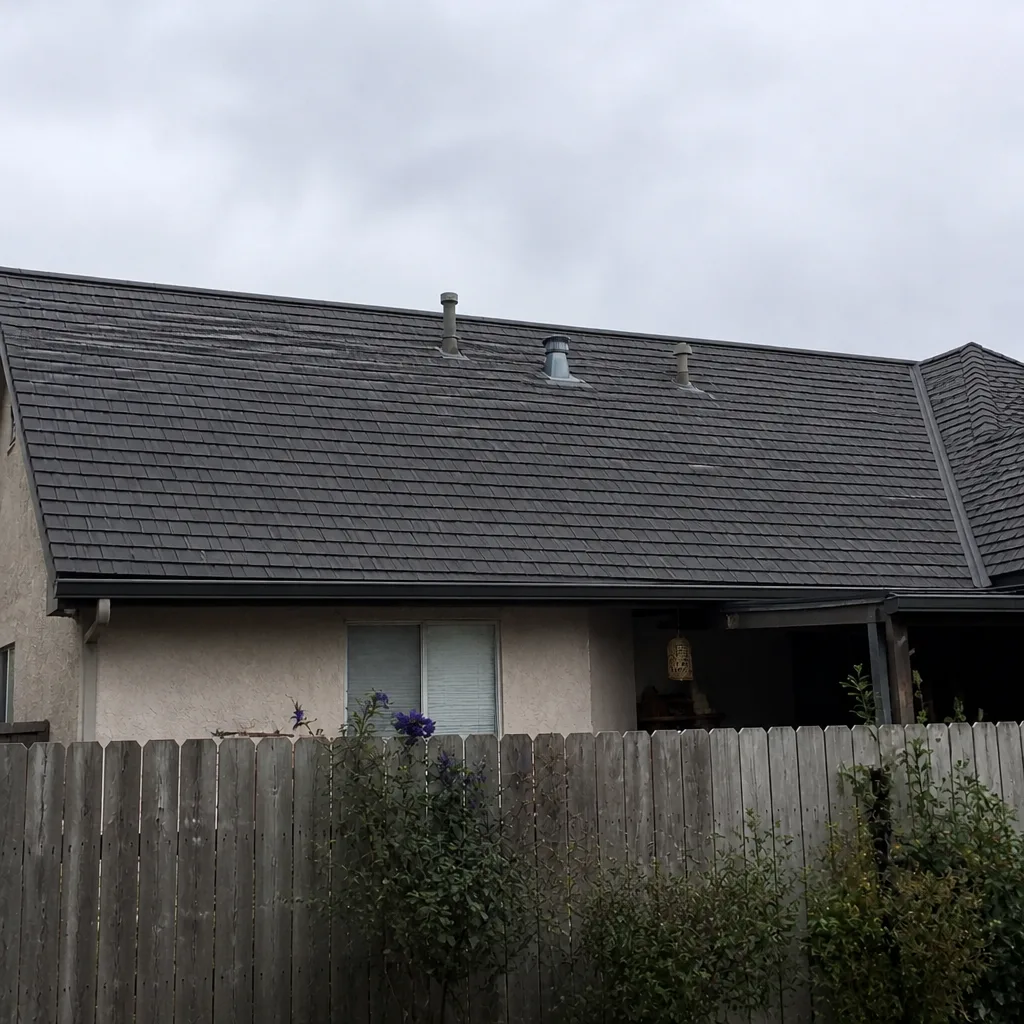
See the difference
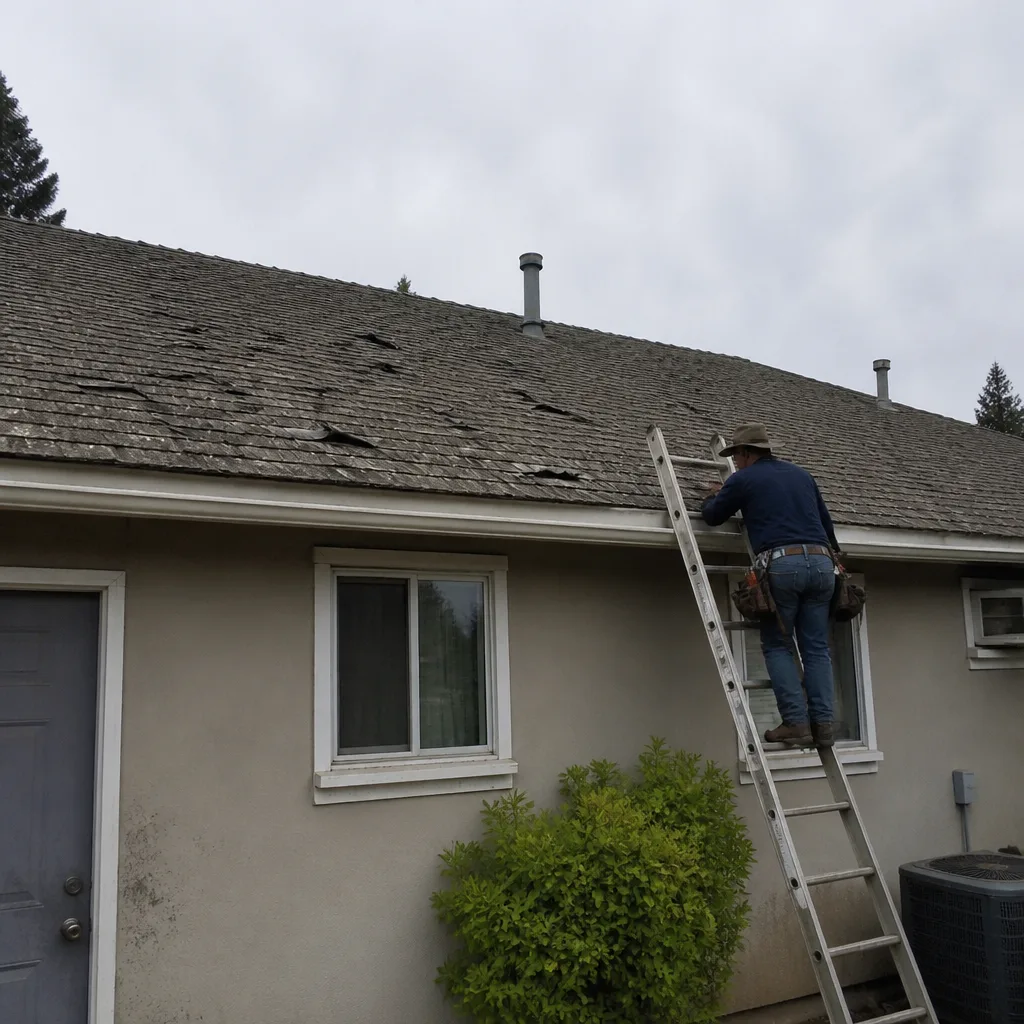 Before
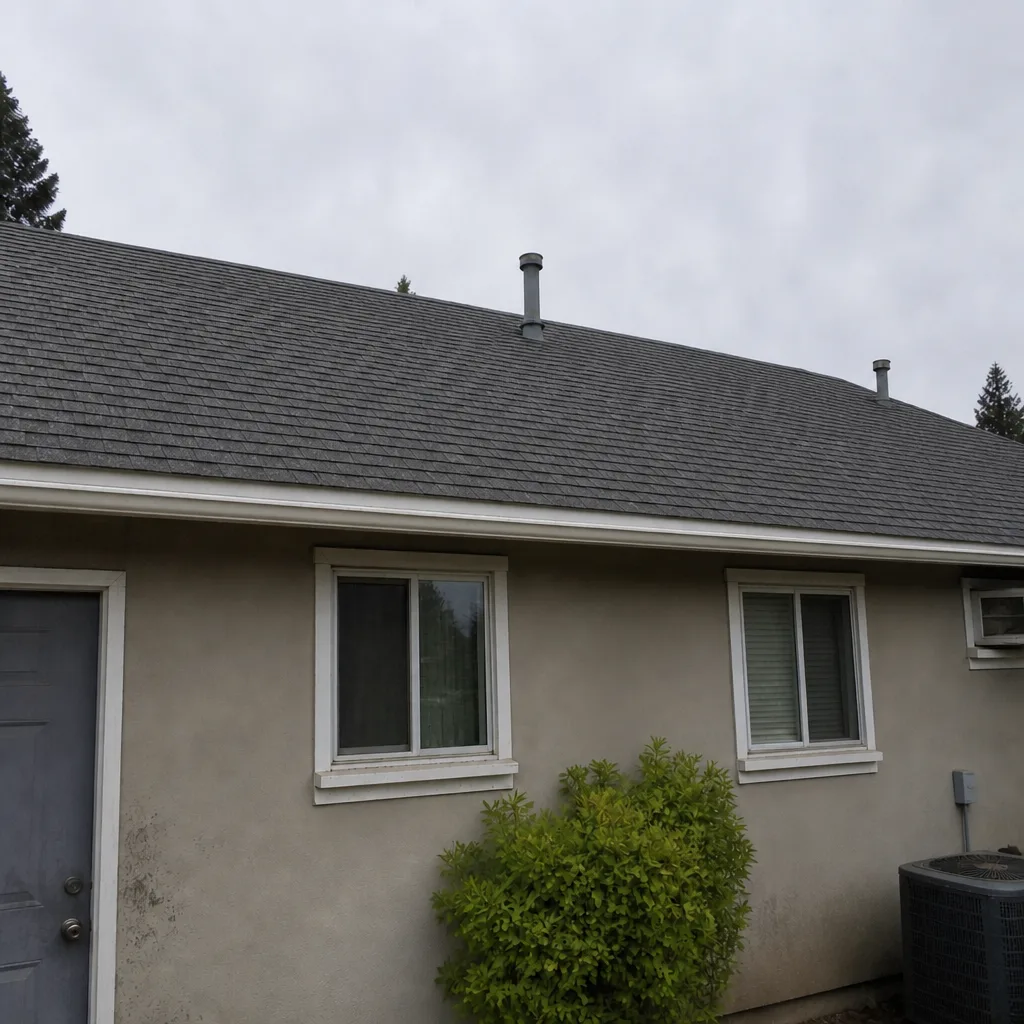 After
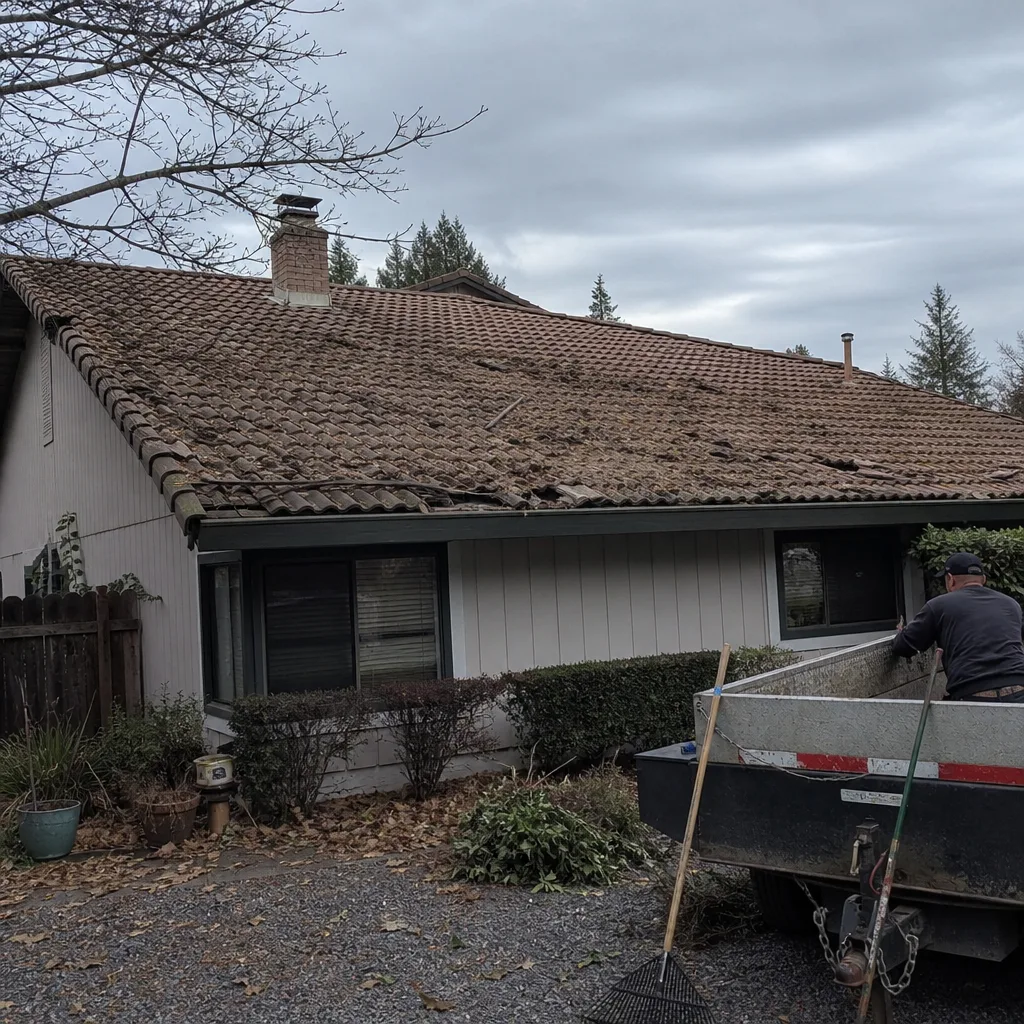 Before
 After
 Before
 After
When to Call a Professional
Call a professional if any of these is true: water is coming in during a storm, a section of roof is sagging or has lost a large area of shingles, you see daylight through the roof deck, flashing has visibly separated, or interior staining keeps returning after rain. These aren’t the kind of thing to watch for another season – the cost of waiting usually climbs with each wet cycle. If you’re simply unsure, an inspection is the low-risk way to find out. Wexford Roof Repair offers free estimates in Paradise – call (833) 936-2087. We answer 24/7. Fast dispatch from 7am to 7pm, Sunday through Friday.
Frequently Asked Questions
The most common are accelerating granule loss in gutters, blistering or alligatoring on flat roofs, flashing that has pulled away from penetrations, and interior stains after rain that might be mistaken for HVAC condensation. Any of these warrants a professional look, and active water intrusion means call today.
Normal aging is light, even granule shedding and a slight surface dulling. Failure looks like heavy, concentrated deposits in the gutters, bald spots where the fiberglass mat shows, or granules you can rub off with your thumb. If you see bare mat or concentrated loss, call (833) 936-2087 for an assessment – estimates are free.
Yes. The daily expansion and contraction driven by intense sun works metal flashing loose over time, and separated flashing is a top source of leaks that get mistaken for shingle problems. It’s one of the best warning signs to catch from the ground, so checking around pipe boots and chimney flashing is worth the effort.
Yes. Some of the earliest signals – damp sheathing, water trails on rafters, faint stains – show up inside the attic or on ceilings before anything looks wrong from the roof surface. That’s why a thorough inspection covers both sides of the system, and why we offer inspection as a standalone service.
Repair is usually right when the damage is localized and the deck and structure are sound. Replacement makes more sense when wear is widespread, repairs would stack up close to replacement cost, or the roof is at the end of its material lifespan. The answer depends on the specific roof, which is why a written assessment matters. Call (833) 936-2087 to schedule one.
From the ground, you can safely check gutters for granule accumulation, look at flashing with binoculars, and note interior stains. Anything that requires walking the roof – checking shingle condition, opening seams, inspecting penetrations up close – is best left to a trained technician. Roof surfaces and heights are genuinely dangerous, so don’t take it on yourself.
The Bottom Line
The warning signs that matter on a Paradise roof aren’t the ones from a generic checklist – they’re the ones this climate produces. Accelerating granule loss pushes a mid-life shingle roof toward failure in a few years. Blistering and alligatoring on flat sections move fast in the heat, and stage 3 is the moment to act. Flashing creep is a hidden leak source you can catch from the ground. Interior stains after rain are often the roof, not the HVAC. And one sign – active water intrusion – means call today, while the rest can wait for a scheduled professional inspection. Wexford Roof Repair does one thing: inspection, repair, and replacement. Call (833) 936-2087 to schedule your free estimate.
Written by the team at Wexford Roof Repair.