
Last updated November 15, 2026
 Metal roofing
 Architectural shingles
 Tile roofing
 GAF
 Owens Corning
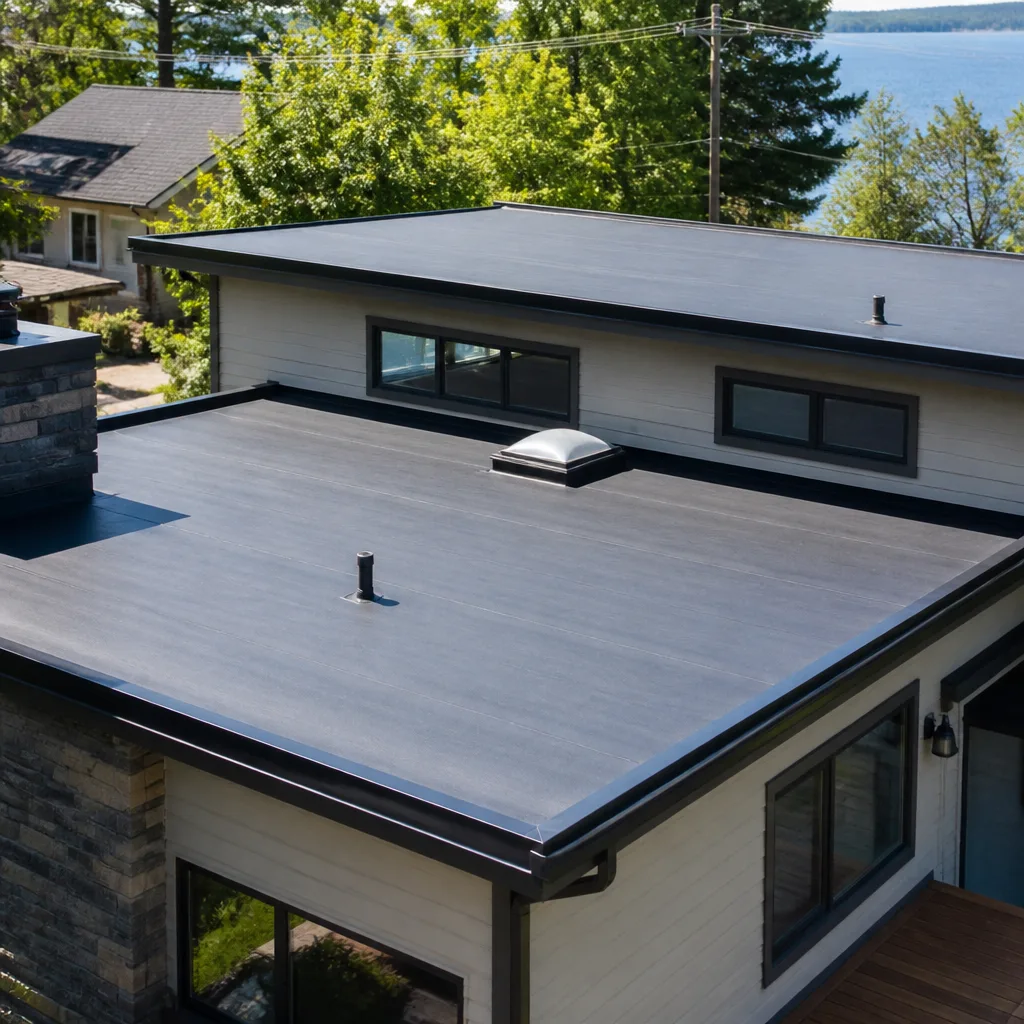 Flat & low-slope
Free roof inspection with deck photos before we talk money - GAF and Owens Corning certified installation
Choosing the Right Roofing Brand: A Buyer’s Guide for Paradise
Most Paradise homeowners pick a shingle by the name they’ve seen on TV, not by the number printed on the label. That number matters more than the logo. The most-advertised shingle brand in America sells a base product rated for 60 mph wind uplift, and Paradise monsoon gusts regularly hit 70 mph. The step up to the next wind tier costs about $400 on a typical reroof. That’s the whole game in Clark County: wind rating, UV resistance, and warranty terms that actually hold up here. This guide teaches you to read all three so no one picks for you.
Quick Answer
The right roofing brand for a Paradise home is the one whose product line meets your roof’s wind uplift and UV needs at a price you can verify, sold and installed by a contractor with access to more than one manufacturer. For most low-slope and pitched homes here, that means an architectural shingle with a documented wind rating at or above what your exposure requires, or a flat-roof system (TPO, modified bitumen) rated for desert heat. Familiarity with a brand name is not a specification. Read the label, not the ad.
Styles & brands we work with
- Architectural shingles
- Metal roofing
- Tile roofing
- GAF
- Owens Corning
- Flat & low-slope
Table of Contents
- Wind Uplift Ratings Decoded: Class D, G, and H
- UV Resistance and Cool-Roof Pigments Compared
- How to Read a Manufacturer Warranty
- Flat and Low-Slope Materials for Paradise Homes
- Why Multi-Brand Access Matters
- Questions to Ask Before You Sign
- How to Verify a Brand Claim
- Common Mistakes to Avoid
Wind Uplift Ratings Decoded: Class D, G, and H
Wind uplift ratings describe how much pressure a roofing assembly can resist before the shingles peel back. The letters run in order from lower to higher performance: Class D, then G, then H. A Class D shingle is tested to a lower uplift threshold than a Class G, and Class G sits below Class H. Most entry-level architectural shingles land around a 60 mph equivalent, while upgraded products in the same manufacturer’s line carry ratings that go higher. In Paradise, the summer monsoon is what separates them.
Storm cells rolling across the valley push short bursts of wind through residential neighborhoods with real force, and lift is worse at ridges, hips, and edges. That’s why the same shingle can survive one roof and fail on the one next door. The installation at those edges matters as much as the product rating, which we’ll get to.
Which tier does a Paradise homeowner actually need?
For most single-family homes here, a product rated comfortably above base level is the sensible floor, not the ceiling. If your home sits on an exposed lot, backs open desert, or has a complex roof with many hips and valleys, the higher tier earns its money. The upcharge between base-tier and next-tier wind rating is small compared with what a partial re-sheet costs after a blow-off. Ask for the manufacturer’s published uplift rating on the exact product being quoted, not the marketing tier.
- Class D: entry-level uplift resistance; fine only on sheltered, simple roofs.
- Class G: mid-tier; the pragmatic choice for most Paradise pitched roofs.
- Class H: highest uplift band; worth considering on exposed lots and complex roofs.
One more thing: the rating belongs to the system, not just the shingle. The starter course, the underlayment, and the nailing pattern all contribute. That’s a big part of why we handle roof repair and replacement with the same material discipline – the details that make a rating real are installation details.
UV Resistance and Cool-Roof Pigments Compared
Sun is the quieter destroyer on a Paradise roof. Even without a monsoon, two hundred-plus clear days a year bake the shingle’s asphalt and fade its granules. When granules erode, the mat underneath is exposed and the roof ages fast. Brands handle this in different ways, and the differences are honest rather than magical.
Across the major lines, premium architectural products use heavier granule coverage and better UV-stabilized asphalt than entry-level ones. Cool-roof pigment technology, which reflects more solar energy and keeps the attic cooler, is offered selectively rather than across every product. Owens Corning and CertainTeed both carry reflective options in parts of their lines; GAF’s premium tiers are engineered for heat cycling too. Malarkey builds its reputation on rubberized asphalt and heavy granule application, which some homeowners prefer for heat and impact resistance. None of these is a miracle coating. The performance differences show up over years, not weeks.
What to compare, brand to brand
- Request the manufacturer’s published data for the exact product, not the brochure tier name.
- Compare granule weight and asphalt type between the products quoted.
- Confirm whether a cool-roof reflective option exists for the line you’re considering.
- Ask how the product’s color holds up under desert sun; dark colors run hotter.
- Check whether the color you want is actually available in the required wind tier.
We work with several manufacturers, so we can hold two or three products side by side for the same roof and let the numbers talk. If you’re not sure whether your roof is due, an inspection first will tell you whether repair buys you years – see our Wexford Roof Repair overview for the full picture.
How to Read a Manufacturer Warranty
A “lifetime” shingle warranty is a limited warranty, and the limits are where the fine print lives. First, it covers materials, not the labor that installs them unless it’s a separate workmanship warranty. Second, the coverage is prorated on many products, so the payout shrinks as the roof ages. Third, and most important in Paradise, most enhanced warranty tiers only activate when the roof is installed by a contractor the manufacturer has registered or certified for that program. Buy a premium shingle and skip the registration and you may hold a base warranty, not the one you paid for.
A simple checklist for warranty terms
- What’s the coverage period for materials, and is it prorated?
- Is labor covered, and by whom?
- Does the enhanced tier require certified-installer registration, and will the installer submit it?
- What are the transferability terms if you sell the home?
- Does the warranty require a specific underlayment or ventilation to stay valid?
Ask the contractor to confirm in writing that they’ll register the installation for the warranty tier you’re paying for. In our experience, the homeowners who get burned on warranties are the ones who never asked who was going to file the paperwork. That question is free and it’s the one that matters.
Flat and Low-Slope Materials for Paradise Homes
Plenty of Paradise homes have flat or low-slope sections, and shingles aren’t the answer there. Three material families cover the residential market here, and each has a clear job.
TPO (thermoplastic polyolefin) is a single-ply membrane, typically white or light gray, welded at the seams. It reflects sunlight well and handles heat cycling without much fuss. It’s clean, it’s lightweight, and it’s a common choice for flat roofs on modern homes. Modified bitumen is an asphalt-based rolled sheet, familiar in older construction, with an exposed mineral or granule surface. It’s durable and repair-friendly, though dark surfaces run hotter. Spray polyurethane foam is applied as a liquid and cures into a seamless insulating layer with a protective coating on top. It seals around penetrations and adds insulation value, but it depends on recoating to hold up under desert sun.
How to match a flat-roof system to your home
- Have the roof inspected to confirm slope, drainage, and whether ponding is a factor.
- Identify existing layers and whether they’ll need removal.
- Weigh reflective performance against cost and longevity for each option.
- Confirm the brand line offers a system rated for desert heat cycling.
- Ask how the transition to any adjoining pitched roof will be detailed and flashed.
The transition details are where low-slope roofs leak. Our technicians have up to 12 years of experience and the manufacturer lineup includes lines suited to these systems, so we can quote a low-slope option alongside the rest of your roof rather than farming it out.
Why Multi-Brand Access Matters
A contractor who installs one brand has one answer. That’s not automatically a problem – a specialist who really knows a line can do excellent work – but it means the recommendation is constrained by the supplier relationship. When a contractor has access to several manufacturers, they can match a product to your budget, your wind exposure, and your aesthetic. Most importantly, they can explain why one product was chosen over another using the manufacturer’s data instead of a sales line.
The industry’s leading roofing brands include names like GAF, CertainTeed, Owens Corning, IKO, Atlas, Tamko, and Boral. The roof replacement process in Paradise runs on this same principle: the right shingle sits at the intersection of wind rating, UV performance, budget, and color availability. If you’re planning a full reroof in Paradise, that intersection is where the estimate should start. When a specialist carries several brands, the buyer gets to choose the product – not the other way around.
How to verify the recommendation is honest
- Ask what other products were considered and why they were rejected.
- Ask for the published rating on the recommended product and the tier below it.
- Ask whether the recommended color is available in the higher wind tier.
- Ask how the warranty tier differs between the quoted options.
- Ask what a cash-price comparison looks like at each tier.
Questions to Ask Before You Sign
The questions you ask before the contract decide more than the brand does. Here are the ones worth writing down, with what a straight answer sounds like.
- Which shingle product are you quoting, and what’s its published wind rating? A clear answer names the product and offers the manufacturer’s data.
- Is the roof getting a new underlayment, and what kind? A roof with no underlayment quote is a shortcut.
- What’s the nailing pattern and starter course? These are where uplift resistance is won or lost.
- Who registers the warranty? The installer should confirm it in writing.
- Is this a repair or a replacement, and how did you decide? The best contractors will tell you a repair is possible when it is.
- How will the disposal and permits be handled? Most cities require a permit for replacement work; ask before signing.
- What does the estimate include, and will the price change? A written line-item estimate with fixed pricing beats a verbal range.
How to Verify a Brand Claim
Any brand claim you hear should be traceable to a document. Here’s how to check one without getting answers from memory.
- Ask for the manufacturer’s technical literature for the exact product, not a brochure.
- Search the manufacturer’s site for the product code and confirm it matches.
- Cross-check the listed wind uplift rating against the sold tier.
- Ask the installer to show their registration status for any enhanced warranty tier.
- Confirm the quoted color and profile exist in the tier you’re buying.
If a claim can’t be matched to literature, treat it as a sales claim rather than a specification. That’s the standard we hold ourselves to when we sit down with a Paradise homeowner, and it’s the one we’d ask of any contractor.
Common Mistakes to Avoid
- Choosing a brand by television recall. The most-advertised shingle line isn’t automatically the best product for a wind-exposed lot in Paradise. Check the rating first.
- Ignoring the wind tier for a color you like. Confirm the color exists in the higher uplift tier before you fall for it. Otherwise you’re paying for a look and getting a base product.
- Believing “lifetime” covers everything. Limited warranties prorate, and the best tiers usually require certified-installer registration to activate. Ask in writing.
- Skipping the underlayment line. A quote that doesn’t mention underlayment is a quote that may hide a shortcut, and Paradise sun is unforgiving.
- Assuming a flat roof uses the same materials. Shingles don’t belong on a low-slope section; TPO, modified bitumen, and spray foam each solve a different problem.
- Hiring a contractor with one brand option. A single-brand shop can only recommend what it carries. That collapses your choice.
- Confusing a sales visit for an inspection. If a “free estimate” turns into a same-day contract pitch, you were sold to, not advised. An inspection should tell you what’s actually wrong.
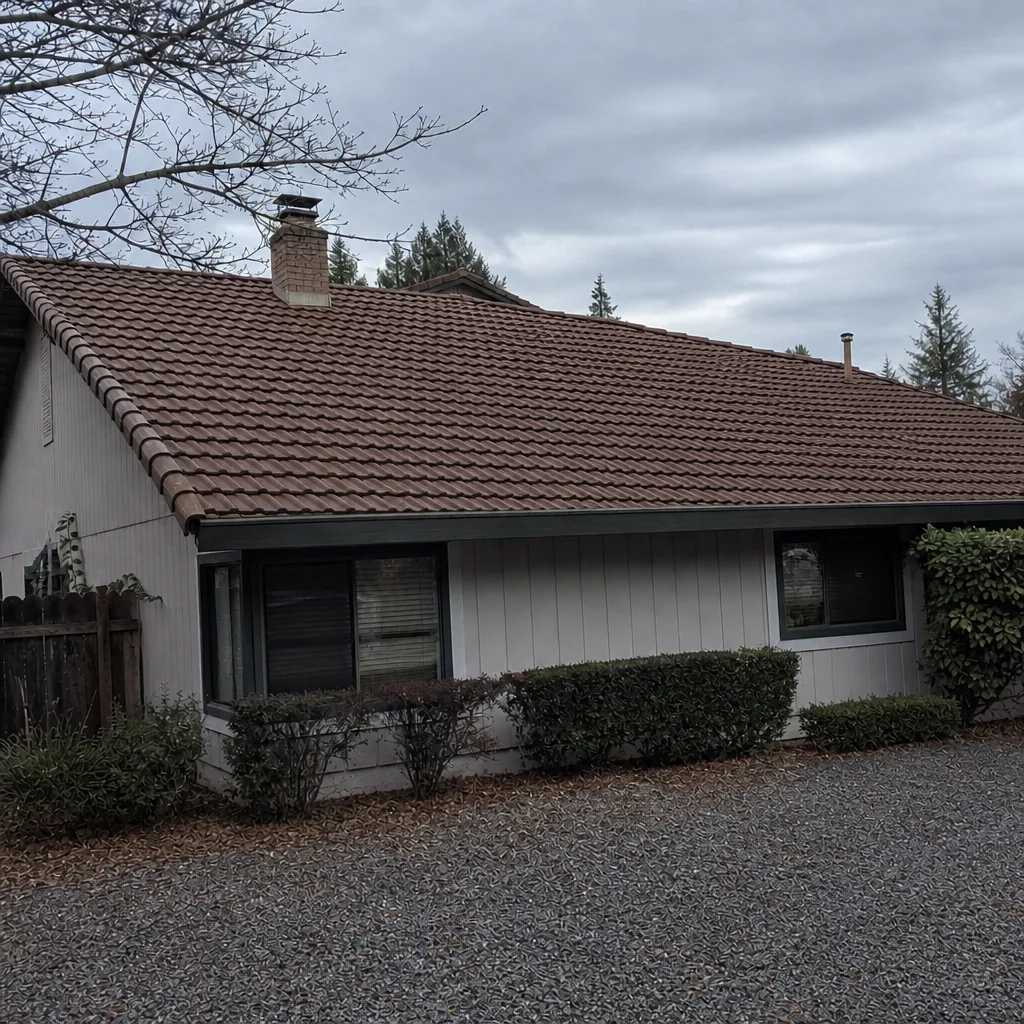
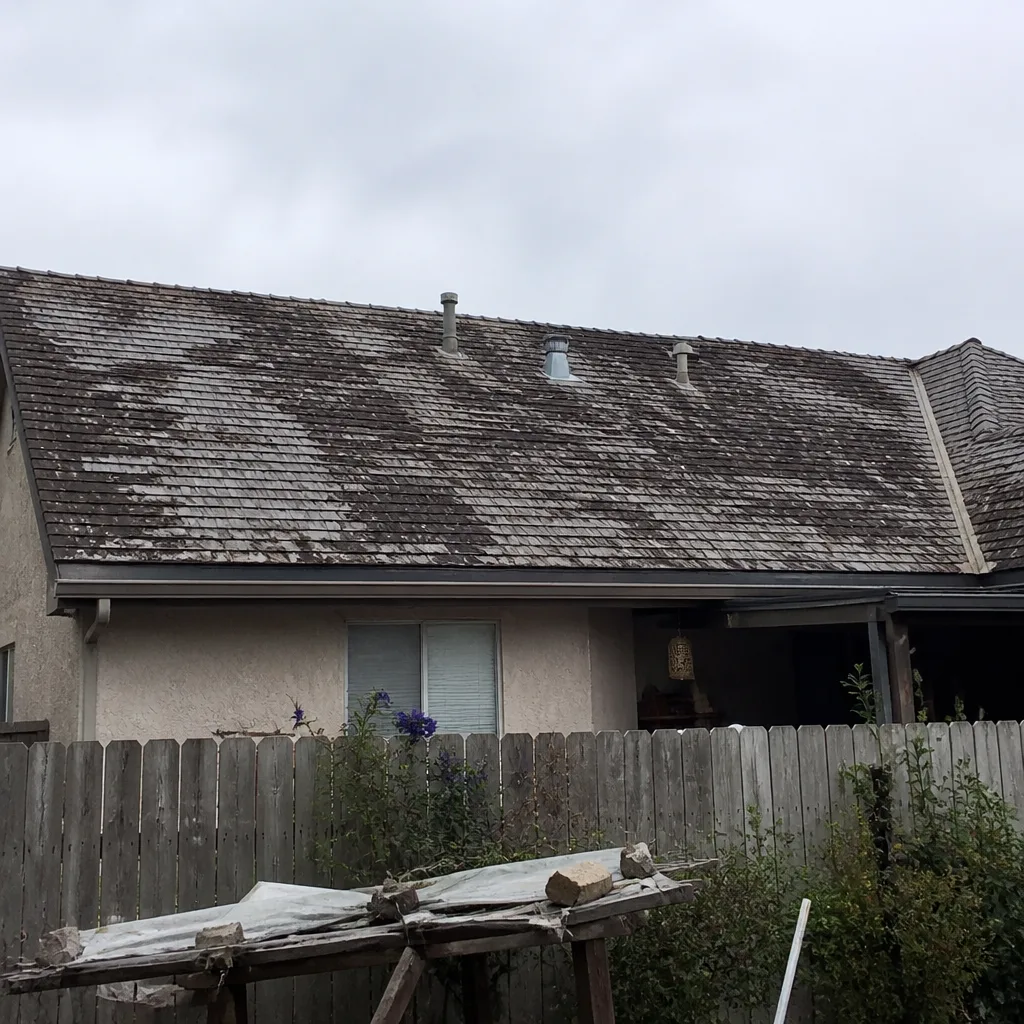
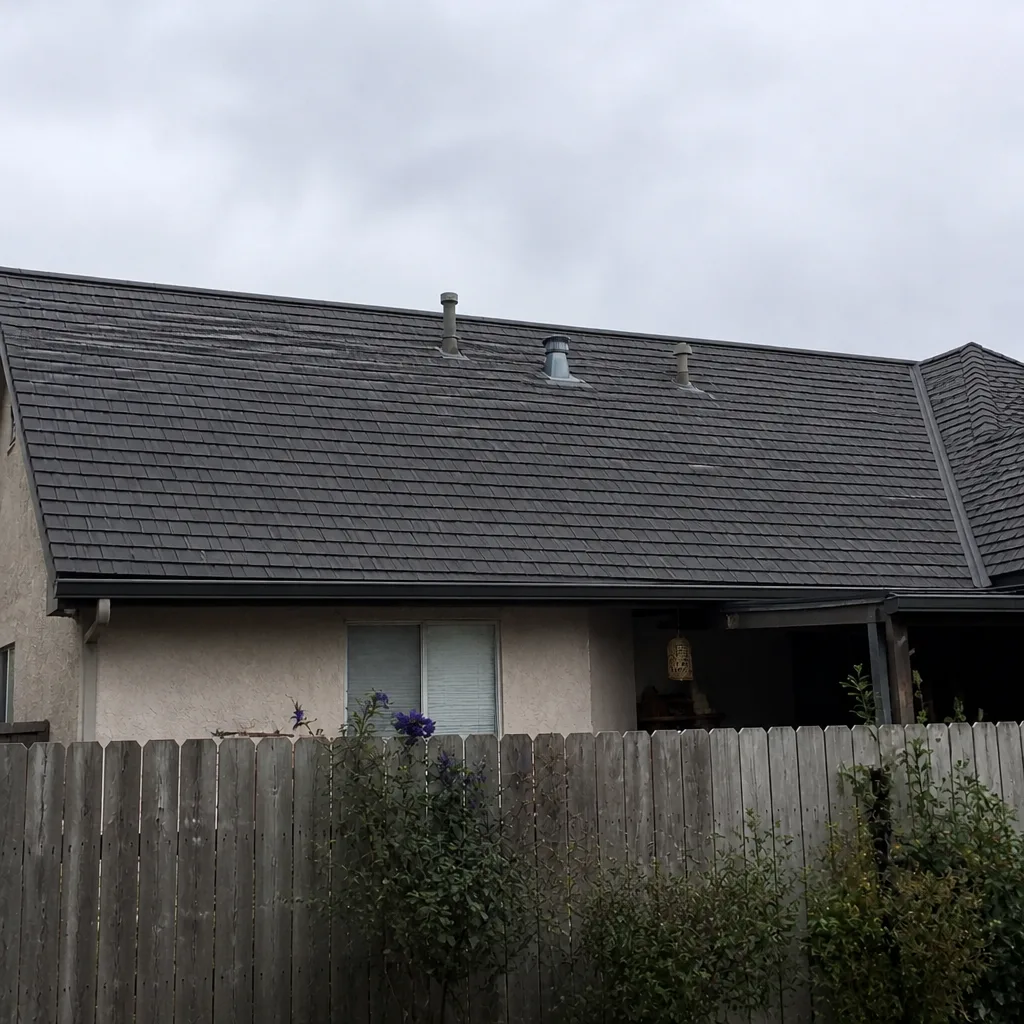
See the difference
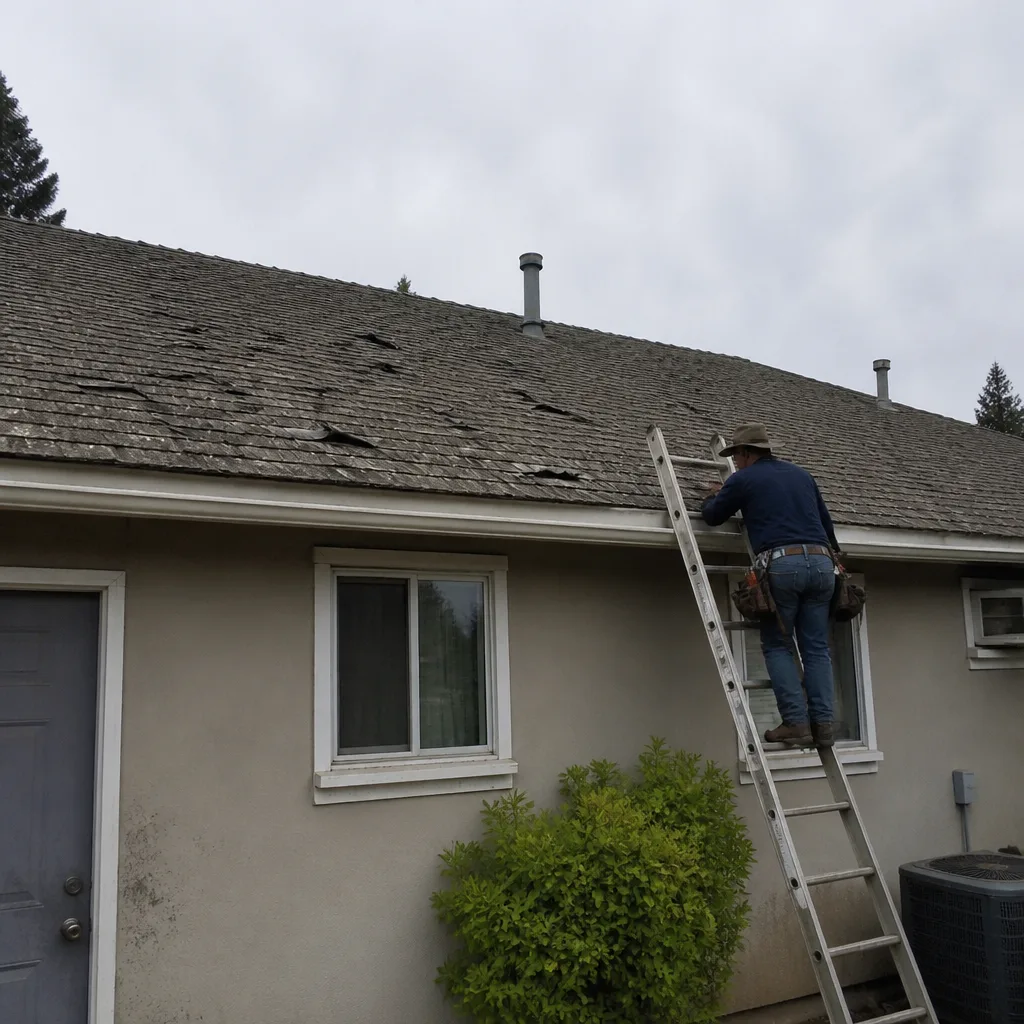 Before
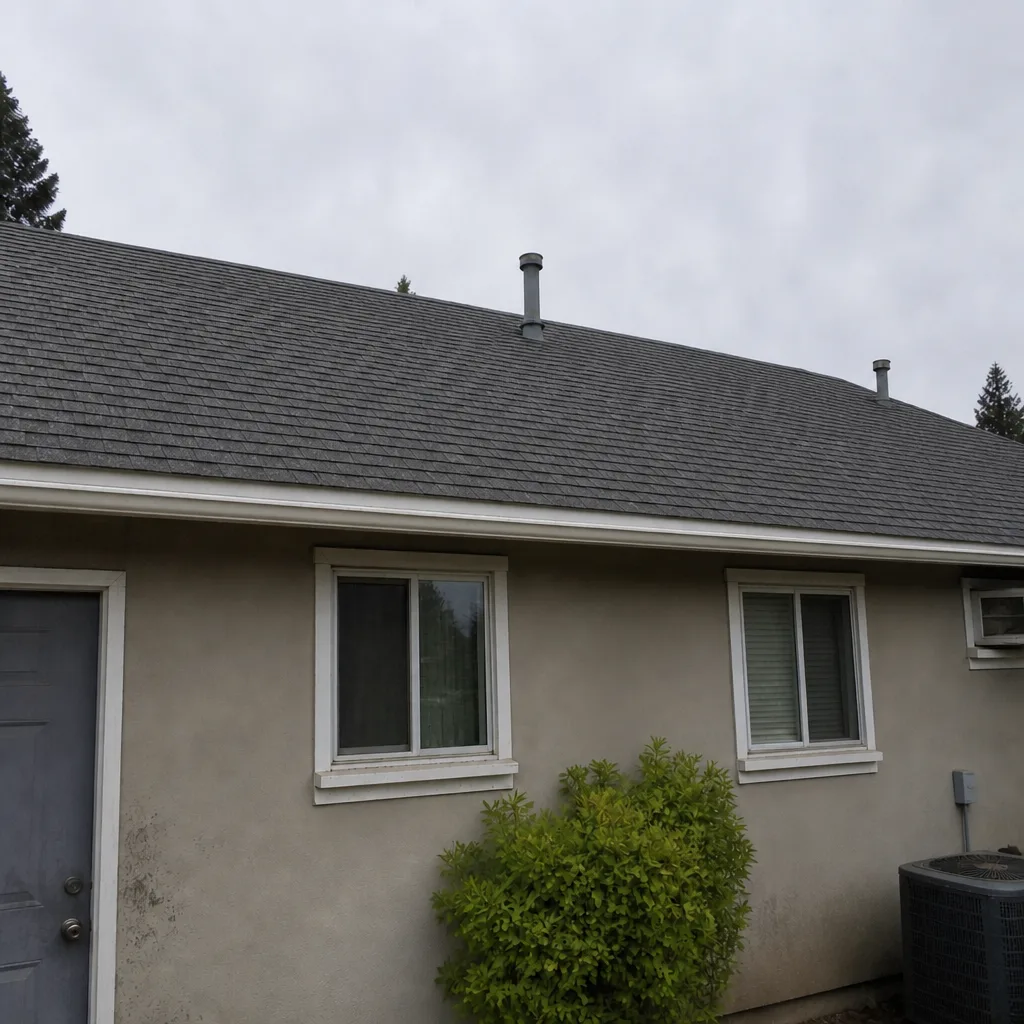 After
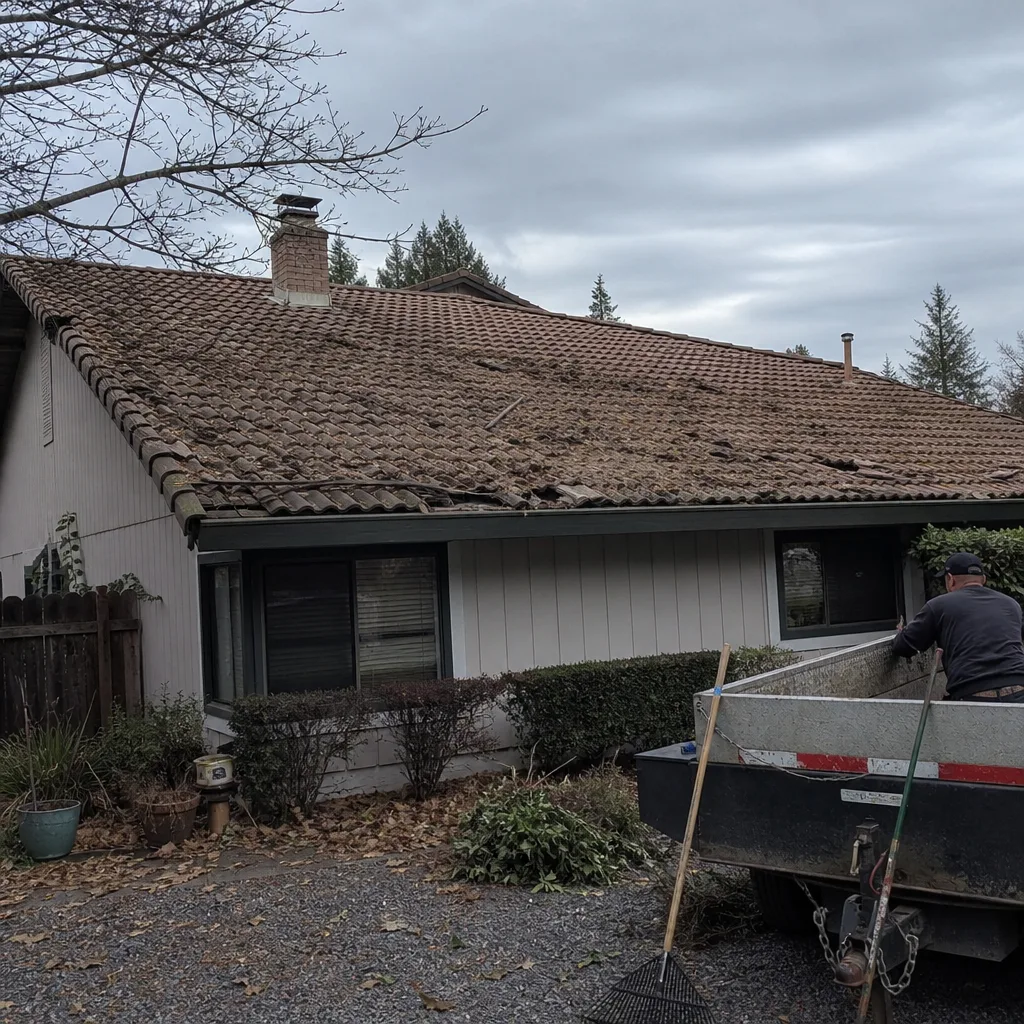 Before
 After
 Before
 After
When to Call a Professional
Call a specialist when you see a stain on a ceiling, a shingle lifted at an edge, granule loss in the gutter, or a section of low-slope roof that ponds after a storm. Those are the symptoms that turn a $2,000 repair into a full replacement if ignored. Steep-slope work and height work are dangerous, and electrical and flat-roof details carry risks most homeowners shouldn’t take on; a trained professional should do the evaluating. If your home is in the older parts of Paradise or near the newer construction on the valley’s edge, the roof likely reflects a different era of building and deserves a professional look. Wexford Roof Repair offers free estimates in Paradise – call (833) 936-2087 for an inspection that tells you what’s actually wrong.
Frequently Asked Questions
There’s no single best brand for Paradise. The right choice depends on your roof’s wind uplift requirement, its sun exposure, whether the color you want is available in the needed tier, and what your budget supports. Brands like GAF, CertainTeed, Owens Corning, IKO, Atlas, Tamko, and Boral all offer products that work here when matched to the right roof. Call (833) 936-2087 for a written estimate comparing products for your home.
Not always, but higher wind tiers are worth the small upcharge on exposed lots and complex roofs. Storm gusts can exceed what base-tier shingles are rated for, and the cost difference on a typical reroof is modest compared with a reinstall after a blow-off. Ask for the published rating on the exact product quoted before you decide.
Monsoon winds concentrate lift at ridges, hips, and edges, and they reward products with a documented uplift rating plus careful installation at those details. That’s why the shingle’s rating and the nailing and starter course matter together. A good installer will explain the edge details before you sign.
A manufacturer warranty covers the shingle’s materials and usually prorates; a workmanship warranty covers the installation. You want both in writing, and you want the installer to confirm they’ll register any certified-installer program the enhanced tier requires. Ask before the contract, not after.
Yes, and you should. A contractor with multi-brand access can hold two or three products side by side for the same roof, with ratings and warranty tiers listed on one page. If the shop carries only one brand, you’ll only ever hear one answer. Call (833) 936-2087 to request a multi-product comparison.
A real inspection focuses on what’s actually wrong and offers a range of options, including repair where it’s viable. A sales visit jumps to a replacement contract, discourages a second look, and pushes one product without showing you alternatives. If you’re pushed past your questions, walk away and get a second opinion.
The Bottom Line
Roofing brand decisions in Paradise should be driven by three things: the wind uplift rating that matches your roof’s exposure, the sun and heat performance of the product line, and warranty terms you can verify in writing. The most-advertised shingle isn’t automatically the right one, and “lifetime” doesn’t mean everything’s covered. The best move is to work with a specialist who can show you several brands, explain the rating tiers, and recommend based on your roof’s needs rather than a supplier agreement. Read the label, not the ad.
If you’re choosing a brand and you want the numbers in front of you before you commit, call Wexford Roof Repair at (833) 936-2087 for a free estimate. We answer 24/7. Fast dispatch from 7am to 7pm, Sunday through Friday.
Written by the team at Wexford Roof Repair.